

Overview
Once upon a time, airport lounges were a mysterious luxury. Always just out of reach and inspiring envy in the common traveler, they were built for those with upper-class tickets, deep wallets, and high-mileage business travel.
In today’s travel landscape, it couldn’t be any more different. There are now more lounges than ever before, soaring from just a few hundred globally in the early 2000s to over 3,500 today. Different bodies have pounced on the demand for luxury travel, especially post-COVID, allowing even the least traveled among us direct access to airports’ most-hallowed corners.
There are multiple ways to experience a lounge and, although they come with caveats, we’re going to dive into them in this piece.
A Brief Reality Check
Before we dive into the how-tos, it’s important to start with something of an expectation setter. Most of our assumptions about lounges are based on depictions from two or three decades ago, primarily from television and movies. They fostered an air of utter luxury, with a glass of champagne in hand on arrival, and total respite from the chaos outside…where the “normal people” are.
Your first visit to a lounge in today’s world might not live up to that. The proliferation of both credit cards and lounges means a huge customer base and a far more varied standard of service. One lounge, you might find exceptional with comfortable rest areas, great food, and a solid free bar. The next time you try, it might be an overcrowded hell-hole with three hundred travelers fighting over a sad-looking sandwich.
Worse yet, as the US is by a considerable margin the epicenter of that credit card-fueled growth, Americans can be getting the worst end of the deal when compared to their foreign counterparts.
The point of this section isn’t to make you avoid lounges, but to temper expectations. They are still great, too, and many of them are still amazing products. But don’t expect the red carpet when you’re walking into a lounge in Milwaukee.
The Rundown
Now for the practical advice. There are multiple ways to enter airport lounges. Some are harder than others, some are more expensive than others, and some are damn near impossible unless you meet specific criteria. Let’s take a look at the main ways to get in.
1. Credit Cards
For better or for worse, credit cards are now the easiest way to enter a lounge. The premium card arms race means more and more cards are adding benefits to their cards. Many of the issuers actually went too aggressively with this tactic and are now having to battle overcrowding by strictening their lounge policies.
Generally speaking, there are three ways credit cards can get you into a lounge:
Co-branded cards permit entry to their respective airline or alliance lounges
General travel credit cards offering perks like Priority Pass and other memberships
Credit specific lounges like the Amex Centurion and Chase Sapphire Lounges
Co-branded cards
Co-branded cards will usually only allow the holder entry to the airline tied to the card. For example, a Delta card could offer entry to the Delta Sky Club, and an American Airlines card could offer entry to the Admirals Club. In some cases, they might grant entry to other airlines in the same alliance when flying with the airline, but this can be hyper conditional.
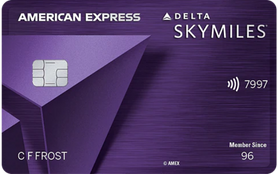
Not every co-branded card offers lounge access, and those that do have become far stricter in recent years. Now, only the more expensive premium cards will offer any significant access, and even that’s limited. For example, the Delta SkyMiles® Reserve American Express Card now only allows 15 free visits a year, with four free guest passes. Beyond that number, cardholders would pay $50 per visit. Partner airline lounges would cost $50 regardless. They do reward spending, though. Hit the $75,000 mark in a Medallion year, and you’ll grab unlimited visits.
United, on the other hand, has much more relaxed policies. Its premium cards offer unlimited visits for the holder and a designated travel partner, while its lower-end cards still offer two visits a year — more than enough for many people.
The point? Don’t waste money on credit card fees if you’re not going to get much from it. Pick a card that makes sense to you.
- Best for: Delta Loyalists
- Annual Fee: $650
- APR: 19.49% - 28.49% Variable
- Reward Rate: 1X-3X
- Recommended Credit: Good to Excellent
Delta SkyMiles® Reserve American Express Card
Earn as high as 100,000 bonus miles
Offer Details:
You may be eligible for as high as 100,000 Bonus Miles after you spend $5,000 in eligible purchases on your new Card in your first 6 months of Card Membership. Welcome offers vary and you may not be eligible for an offer. Apply to know if you’re approved and find out your exact welcome offer amount – all with no credit score impact. If you’re approved and choose to accept the Card, your score may be impacted.
Why we like it
The Delta SkyMiles® Reserve American Express Card is built for frequent Delta fliers who want the most return from their loyalty. Regular business travelers will make the most from the card.
Enjoy complimentary access to the Delta Sky Club® when traveling on a same-day Delta-marketed or Delta-operated flight. You’ll also receive complimentary access to The Centurion® Lounge when you book a Delta flight with your Reserve Card. Plus, there’s a bevy of other benefits, like up to $240 in statement credits for U.S. Resy restaurants, and up to $120 in statements credits for U.S. rideshare purchases with select providers.
Reward details
3X Miles on Delta purchases.
1X Miles on all other eligible purchases.
Pros & Cons
Pros
Delta SkyMiles® Reserve American Express Card Members receive 15 Visits per Medallion® Year to the Delta Sky Club® when flying Delta and can unlock an unlimited number of Visits after spending $75,000 in purchases on your Card in a calendar year. Plus, you’ll receive four One-Time Guest Passes each Medallion Year so you can share the experience with family and friends when traveling Delta together.
Enjoy complimentary access to The Centurion® Lounge in the U.S. and select international locations, Sidecar by The Centurion® Lounge in the U.S., and Escape Lounges when flying on a Delta flight booked with this card. (To access Sidecar by The Centurion® Lounge, Card Members must arrive within 90 minutes of their departing flight (including layovers). To access The Centurion® Lounge, Card Members must arrive within 3 hours of their departing flight. Effective July 8, 2026, during a layover, Card Members must arrive within 5 hours of the connecting flight.)
Fee credit for Global Entry or TSA PreCheck®
First checked bag free on Delta flights
No foreign transaction fees
Up to $120 in statement credits for U.S. rideshare purchases with select providers.
Up to $240 in statement credits at U.S. Resy restaurants.
Cons
The high $650 annual fee is only worth it for very frequent Delta travelers or high spenders
Its miles-earning potential is relatively low for a high-end card; the only bonus spend category is 3X miles per dollar on Delta purchases
General travel cards
General travel credit cards take a different approach to lounge access. Instead of tying you to one airline or alliance, they usually offer access to broad lounge networks or proprietary lounges that work regardless of who you’re flying. That flexibility is the main appeal, especially if you don’t stick to a single carrier.
Most premium general travel cards include some form of lounge membership, like Priority Pass, which often covers hundreds or even thousands of locations worldwide. In practice, that means you can walk into a lounge whether you’re flying economy on a low-cost carrier or business class on a full-service airline. There’s no status required and no alliance rules to decode. Some are getting stricter with guests, etc, as well, but just do some research before you leave.
Broadly speaking, general credit cards will be a better option for most people. Unless you’re a die-hard SkyClub fan (I don’t know why you would be), it gives you more options, more flexibility, and fewer stupid rules to follow.
The downside is that a lot of people now have these cards, meaning they’re subject to the same issues of overcrowding and service quality. The upside is that when an airport has multiple lounges, if one stinks, you can try another. Silver linings and all that.
- Best for: Beginner Travelers
- Annual Fee: $95
- APR: 19.24% - 27.49% Variable
- Reward Rate: 1X - 5X
- Recommended Credit: 670-850
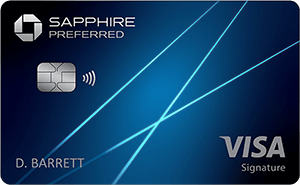
Chase Sapphire Preferred® Card
75,000 Bonus Points
Offer Details:
Earn 75,000 bonus points after you spend $5,000 on purchases in the first 3 months from account opening.
Why we like it
The Chase Sapphire Preferred Card is the ultimate all-around travel credit card—it fits perfectly into almost any points-earner’s wallet. Points novices can enjoy a significant intro bonus and easy to grasp spending categories with an approachable annual fee. The more experienced can utilize its high value earning potential as a secondary card and also gain access to Chase’s strong travel booking portal.
Reward details
5x on travel purchased through Chase Travel℠.
3x on dining, select streaming services and online groceries.
2x on all other travel purchases.
1x on all other purchases.
Pros & Cons
Pros
The $50 dollar hotel credit for stays purchased on the Chase Travel Portal already cuts the already approachable $95 annual fee significantly.
10% anniversary points boost – each account anniversary you’ll earn bonus points equal to 10% of your total purchases made the previous year.
Complimentary DashPass which unlocks $0 delivery fees & lower service fees for a min. of one year when you activate by 12/31/27. Plus, a $10 promo each month on non-restaurant orders.
Along with all of the above, cardholders also have access to a string of travel protections like rental coverage, cancellation insurance, and purchase protection.
Cons
It’s subject to Chase’s 5/24 rule. So, if you’ve opened five cards in the last two years, you’re most likely not going to be accepted.
Competing cards like the Capital One Venture have a better earning rate for non-bonus spend.
Chase has a once-per-lifetime rule for sign-up bonuses on their Sapphire cards, including the Sapphire Preferred, Sapphire Reserve, and Sapphire Reserve for Business. So, once you’ve earned a welcome bonus on any of these cards, you’ll never be eligible for the bonus again on the same card.
Terms Apply
Credit card-specific lounges
These could be included in the general card section, but they’re worth highlighting on their own. On top of the lounge memberships that many general cards offer, issuers are launching their own lounges.
Amex has the Centurion range, which is by a considerable distance the largest collection so far. I’ve been in about ten of these, and I’d probably opt for one in most circumstances unless I had a business or first-class lounge to choose instead. Chase and Capital One are both expanding their own ranges, but they’ve a long way to go to catch up. I haven’t tried any of them out, but I’ve heard good things.
- Best for: Luxury Perks
- Annual Fee: $895
- Pay Over Time APR
- Reward Rate: 5X
- Recommended Credit: Good to Excellent
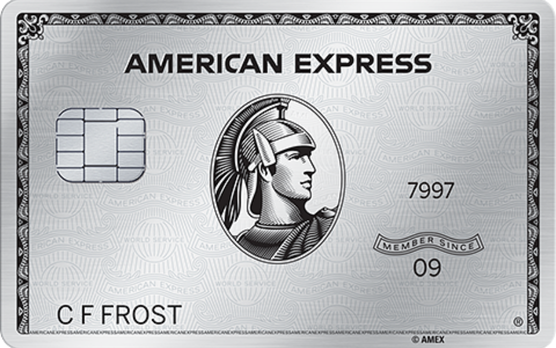
American Express Platinum Card®
As high as 175,000 Membership Rewards® Points
Offer Details:
You may be eligible for as high as 175,000 Membership Rewards® points after you spend $12,000 in eligible purchases on your new Card in your first 6 months of Card Membership. Welcome offers vary and you may not be eligible for an offer. Apply to know if you’re approved and find out your exact welcome offer amount – all with no credit score impact. If you’re approved and choose to accept the Card, your score may be impacted.
Why we like it
The Amex Platinum was once the sole dominating force in the luxury credit card space. While it now faces some stiff competition, it still offers unbeatable perks like unprecedented airport lounge access, elite status at Hilton and Marriott, and some outstanding statement credits making the mammoth $895 worth it for some.
Reward details
Get more for your travels with 5X Membership Rewards® points on all flights and prepaid hotel bookings through American Express Travel®, including Fine Hotels + Resorts® and The Hotel Collection bookings.
You earn 5X points on flights purchased directly from airlines or through American Express Travel® on up to $500,000 on these purchases per calendar year.
Pros & Cons
Pros
-
Large intro bonus
Incredible lounge access
-
Statement credits worth over $3,500 annually.
-
Unlock access to exclusive reservations and special dining experiences with Global Dining Access by Resy when you add your Platinum Card® to your Resy profile.
Cons
-
The $895 annual fee is brutally high. Too high for many that can’t, or don’t want to take full advantage of its benefits.
-
Points-earning rates are low unless spending directly on flights or with the Amex Portal.
-
Some of the benefits, like travel credits, are more limited and are harder to use than competing cards’ offerings.
2. Loyalty Programs
This is a kind of sad section, because it’s emblematic of the commercialized shift in the world of travel. In the past, the only people who could really get lounge access were those with deep enough wallets to fly business or first class, or those with elite status. Elite status used to be earned purely by flying with the airline, and it rewarded the work-warriors flying two or three times a week with a specific airline or more regular long-haul travelers.
Now, to much outrage and disappointment, the metric elite status acknowledges is spending. The same traveler who flies five or six times a month with the same airline may earn fewer loyalty points than the casual flyer who waltzes in and spends thousands on one business class flight. It’s not that those who spend shouldn’t be rewarded, but calling it a loyalty program now feels a little disingenuous, even disloyal to their trusted customers.
Still, elite status is one way to gain regular access to lounges. Below are the tiers from the big three airlines and what they offer. If the tier isn’t listed, it doesn’t have any lounge access. Note, as well, that in many cases it’s not an automatic qualification. Flying in economy in some cases won’t get you in, even if you’re top tier. It’s also possible to opt in to certain benefits at the expense of others, but that can be an entire article in itself.
Executive Platinum — lounge access on qualifying international itineraries; top-tier oneworld benefits
Platinum Pro — oneworld Sapphire; business-class lounge access when flying partners
Platinum — limited lounge access via oneworld status on international flights
Diamond Medallion — Sky Club access on qualifying international premium itineraries
Platinum Medallion — Sky Club access when flying Delta One or Premium Select internationally
Gold Medallion — similar international premium-cabin Sky Club access
Premier Gold — Star Alliance Gold; United Club access on international itineraries
Premier Platinum — same Star Alliance Gold lounge access
Premier 1K — same lounge access, plus additional priority perks
Global Services — invite-only; broad lounge access across United and partners
Again, there is a ton of small print in each of these programs that permits you entry to lounges abroad or domestically when flying specific routes or specific airlines in specific cabins, so do a bit of research before committing to any program. None of them is the same.
Pay for Entry
Last, and definitely least, is paying for entry. You’re only able to do this at some lounges and, by definition, not the exclusive ones. There are a couple of ways to do this:
Pay for a single entry at a specific lounge
Pay for an airline-specific membership
Pay for a lounge membership like Priority Pass
Paying for a single entry can be a risky choice unless you know the lounge well. It’ll often run beyond $50 per person for entry, which turns into an expensive few hours for a family (even considering airport food prices). Before doing this, consider your reasons. Is the peace you’ll find there worth the money? Are you actually saving compared to your typical habits? Are you doing it for clout?
Regardless, going in blind after paying can be rough. I’ve paid for lounges I know are great before — usually only when I have some work to do and know it’ll help me get through it, or if I have an epic layover — but there aren’t many situations when I’d casually do it without knowing the lounge.
An airline-specific membership can be a decent deal if you fly that airline a lot, but it’s important to grasp what a lot means. You can only purchase a SkyClub membership, for example, if you’re already a Medallion elite member. In that case, there’s a good chance you already have one of the Delta cards. Plus, if you fly less than 15 times a year, opening the Reserve card is probably a better call. American, on the other hand, lets anyone purchase an annual membership. But it’ll set you back $850 as a non-elite. It’ll cost $79 for a one-time day pass, so even if you and two guests paid that every time you went, it would still take three visits to make the annual pass worth it.
Generally, if you fly a fair amount and want regular lounge access, paying for a Priority Pass membership or something similar is your best bet. It gives you the most variety, the most coverage, and is significantly cheaper than the specific airline offerings.
Do some math before you dive into it.
Flying in Premium Seats
It’s a common misconception nowadays that flying in a premium seat guarantees lounge access. While the rules differ from airline to airline, you can expect lounge access when flying international in a business or first class seat, but you can’t assume the same privilege when flying domestically.
Some carriers, like Delta and United, limit lounge access domestically, even for First Class passengers. American, on the other hand, allow exceptions when flying a “Flagship” route or transcontinental flights. It’ll all depend on the airline.
The Point
There are a ton of ways to access airport lounges. Whether that’s using a credit card, being an elite member, or simply purchasing a membership. But it’s crucial to ensure you’re not putting yourself in a bad financial or experiential position to do so. Consider your travel habits, your budget, and the airlines you fly before pouncing on the first offer that comes your way.
- Best for: Luxury Travel

- Annual Fee: $795
- Flex for Business Variable APR: 17.74% - 28.49%
- Reward Rate: 1X - 10X
- Recommended Credit: 740-850
Chase Sapphire Reserve®
125,000 bonus points
Offer Details:
Earn 125,000 bonus points after you spend $6,000 on purchases in the first 3 months from account opening.
Why we like it
This card just got a major re-vamp and you can now get more than $2,700 in annual value with Sapphire Reserve!
Reward details
8x points on Chase TravelSM
4x points on flights and hotels booked direct
3x points on dining
1x points on all other purchases
Pros & Cons
Pros
-
The points are worth up to 2 cents a piece when used directly on Chase’s Ultimate Rewards Portal, offering a simple but high-value use for your points.
-
Plenty of excellent transfer partners allow points to be maximized
-
Some excellent partnerships with Doordash and Lyft add to its value.
-
Priority Pass membership allows access to over 1,300+ airport lounges and restaurants.
Cons
-
It’s subject to Chase’s 5/24 rule. So if you’ve opened five cards in the last two years, you’re most likely not going to be accepted.
-
Chase has a once-per-lifetime rule for sign-up bonuses on their Sapphire cards, including the Sapphire Preferred, Sapphire Reserve, and Sapphire Reserve for Business. So, once you’ve earned a welcome bonus on any of these cards, you’ll never be eligible for the bonus again on the same card.





 by your friends at The Daily Navigator