

Overview
If you flipped open my wallet, you might be a little baffled. At any one time, there could be seven or more credit cards stuffed anywhere and everywhere, and maybe two or three more in a drawer back at my place.
For those serious and incredibly geeky about points and miles, this is pretty normal. We went down the loyalty rabbit hole years ago, and have a specific card for any and every purchase, two more that are never swiped, but lend us lounge access and other perks, plus a few that have overstayed their welcome but have a few months left before they hit the chopping block.
But if you’re a fresh-faced traveler with an eye on free travel, your own wallet might be a little barer. But don’t worry; everyone has to start somewhere. Let’s look at the first few rungs on the card ladder that will help build your points-earning core and set you up for long-term success.
For the sake of simplicity, let’s assume our hypothetical newbie has a solid credit score, may have owned or still owns a non-travel-centric card, and is in good financial standing.
Card One: The Eye-Opener
There are a few ways to look at the first card in any powerful points-earning wallet. Some might suggest it’s best to go for a free card that lets you earn a few points here and there for your purchases, and gives you an idea of what they can do.
I disagree.
The first card should be a bit of a head-turner. I’m not saying everyone should open an $800 premium card and plunge headfirst into those complexities. But finding a strong earner with a good introductory offer and an approachable annual fee is the best way to get excited about points and miles. Plus, pick the right one, and it’ll be in your wallet for years.
So the key criteria look like this:
Strong earning power
Approachable annual fee
Head-turning bonus
There’s one card that immediately springs to mind, and that’s the Capital One Venture Rewards Credit Card. It ticks every box in spectacular fashion. It boasts a brilliant 2x miles per dollar earning rate on every purchase, a 75,000-mile intro bonus after spending $4,000 within three months of opening, and only costs $95 a year to own.
Not only does that pack an impressive punch, but it has some incredible staying power. As you build your card arsenal, the Venture plays a huge role in mopping up miles where your other cards don’t. They might have sexy bonus miles on restaurants or travel, but it’s the Venture that ensures you never stoop to a lowly 1x mile per point.
Plus, 75,000 miles is an incredible introduction to miles and could comfortably carry you to Europe. If that doesn’t get you hooked, you might be in the wrong game.
I’m not even going to suggest another card. I think this is the perfect first serious card, and the only reason you’d close is to upgrade to the Capital One Venture X Rewards Card.
- Best for: Travelers who want to keep it simple

- Annual Fee: $95
- APR: 19.74% - 28.74%
- Reward Rate: 2X-5X
- Recommended Credit: 660-850
Capital One Venture Rewards Credit Card
75,000 Bonus Miles + $300 travel credit
Offer Details:
LIMITED-TIME OFFER: Enjoy $300 to use on hotel and vacation rental bookings through Capital One Travel in your first cardholder year, plus earn 75,000 bonus miles once you spend $4,000 on purchases within the first 3 months from account opening
Why we like it
The Capital One Venture is an excellent go-to card for any traveler, thanks to its easy to navigate 2 miles per dollar on every purchase. With no bonus categories to consider, a reasonable $95 annual fee, and a strong intro offer.
Reward details
5 Miles per dollar on hotels, vacation rentals, and rental cars booked through Capital One Travel
2 Miles per dollar on every purchase, every day
Pros & Cons
Pros
-
Strong intro offer
A steady 2 miles per dollar on all purchases makes earning simple and lucrative. You’ll also grab 5 miles per dollar when booking through Capital One’s travel portal.
-
Flexible miles allow for a wide array of redemption options.
-
You can enjoy two free visits to a Capital One Lounge each year.
Cons
-
Capital One lacks US-based airline and hotel transfer partners.
-
Not many major perks beyond its miles value.
Terms Apply
Card Two: The Lifestyle Leverage
Card Two is where things start to get a little more interesting. You’ve given yourself a strong base with the Venture’s 2x miles per dollar earning rate, but you want more, and there are cards that can do that for you.
The first step here is to analyze your spending. Dial in on your biggest spending categories, whether that’s travel, dining, supermarkets, gas, or entertainment. Rank them from highest to lowest, then start checking out cards.
Your goal here is to match your spending with a card boasting strong earning rates in your biggest categories. Many of these cards will still fall under the mid-range annual fees, with a few creeping up the ladder a little — but remember, those that do typically offer more in return for the right person. Here are a few examples.
Big dining and grocery bills - American Express® Gold Card
If you eat out a lot, spend a lot on groceries, or both, the American Express® Gold Card is your greatest ally and a card I would call (almost) indispensable. It has a whopping 4x points per dollar earning rate on those categories, blowing away the competition.
It also has an enormous intro bonus of as high as 100,000 points after spending $8,000 within six months of opening the card. Note the “as high as” phrasing. Your offer might be different.
The downside is the $325 annual fee. Once upon a time, that was a premium fee, but now, all but a few are getting scarily close to the $1,000 mark. This is a big contender for a lot of people
- Best for: Foodies

- Annual Fee: $325
- See Pay Over Time APR
- Reward Rate: 1X-5X
- Recommended Credit: Good to Excellent
American Express® Gold Card
Earn as high as 100,000 Membership Rewards® Points
Offer Details:
You may be eligible for as high as 100,000 Membership Rewards® Points after you spend $8,000 in eligible purchases on your new Card in your first 6 months of Card Membership. Welcome offers vary and you may not be eligible for an offer. Apply to know if you’re approved and find out your exact welcome offer amount – all with no credit score impact. If you’re approved and choose to accept the Card, your score may be impacted.
Why we like it
The American Express® Gold Card takes your dining and grocery spending to the next level, offering an impressive 4X Membership Rewards® points per dollar spent on purchases at restaurants worldwide, on up to $50,000 in purchases per calendar year, then 1X points for the rest of the year, and 4X Membership Rewards® points per dollar spent at U.S. supermarkets, on up to $25,000 in purchases per calendar year, then 1X points for the rest of the year.
To put this into perspective, if you spend $8,400 annually on dining and groceries, which aligns with the average American’s spending, you could earn enough points for a roundtrip flight to Hawaii. Meanwhile, the bonus alone is worth over $1,000, adding significant value to your everyday spending. It’s probably the best card out there for dining and grocery purchases.
Reward details
Earn 4X Membership Rewards® points per dollar spent on purchases at restaurants worldwide, on up to $50,000 in purchases per calendar year, then 1X points for the rest of the year.
Earn 4X Membership Rewards® points per dollar spent at US supermarkets, on up to $25,000 in purchases per calendar year, then 1X points for the rest of the year.
Earn 5X Membership Rewards® points on prepaid hotel stays booked through AmexTravel.com or the Amex Travel App™.
Earn 3X Membership Rewards® points on flights booked through AmexTravel.com, the Amex Travel App™, or purchased directly from airlines.
Earn 2X Membership Rewards® points on prepaid car rentals booked through AmexTravel.com or the Amex Travel App™ and cruises booked and paid through AmexTravel.com.
Earn 1X Membership Rewards® point per dollar spent on all other eligible purchases.
Pros & Cons
Pros
-
There are a lot of statement credits available, if you utilize them.
-
The dining and grocery rewards are some of the best out there.
-
Explore over 1,400 upscale hotels worldwide with The Hotel Collection and receive a $100 credit towards eligible charges* with every booking of two nights or more through AmexTravel.com. *Eligible charges vary by property.
-
Apply with confidence. Know if you’re approved for a Card with no impact to your credit score. If you’re approved and you choose to accept this Card, your credit score may be impacted.
Cons
-
$325 annual fee
-
No major travel perks like its bigger sibling, the Amex Platinum
Big on travel - American Express® Green Card
If you’re a frequent traveler, and that includes transit, trains, ferries, cabs, and everything, the Amex Green has you covered. It doesn’t have as exciting an intro bonus, but its brilliant 3x points per dollar earning rate on all travel, transit, and dining is a pretty huge catch-all.
Keep in mind that most cards require you to book hotels and flights directly or use their own portal. The Green counts anything and everything as long as it’s travel-related. It’s arguably the most underrated card in the travel space.
- Best for: One-off lounge visits

- Annual Fee: $150
- APR: 18.49%-29.24% Variable
- Reward Rate: 1X-3X
- Recommended Credit: Good to Excellent
American Express® Green Card
40,000 Membership Rewards® Points
Offer Details:
40,000 Membership Rewards® Points after you spend $3,000 on purchases in your first 6 months of account opening.
Why we like it
The American Express® Green Card is a great travel card for those who want to accumulate as many membership rewards points as possible through their everyday spending. Its 3X points-earning on travel and dining purchases means you’ll be on your way to booking award flights and hotels in no time. Plus, it has a few other valuable travel benefits that get you access to airport lounges and expedited security at airports.
Reward details
3X Membership Rewards® points on travel including airfare, hotels, cruises, tours, car rentals, campgrounds, and vacation rentals.
3X Membership Rewards® Points on transit purchases including trains, taxicabs, rideshare services, ferries, tolls, parking, buses, and subways.
3X Membership Rewards® points on eligible purchases at restaurants worldwide, including takeout and delivery in the US.
1X Membership Rewards® points on all other purchases.
Pros & Cons
Pros
The substantial 40,000-point intro bonus is earned by spending an extremely achievable $3,000 in six months. Well within a realistic budget for many.
Great points-earning rate on two popular spending categories: travel and dining
Annual CLEAR® Plus statement credit covers the cost of a membership that will get you through airport security much quicker
You get lounge access perks, albeit limited, without the large annual fee required by many other cards with similar benefits.
Cons
$150 annual fee
Ancillary benefits are more limited when compared to similar cards
The all-rounder - Citi Strata Premier® Card
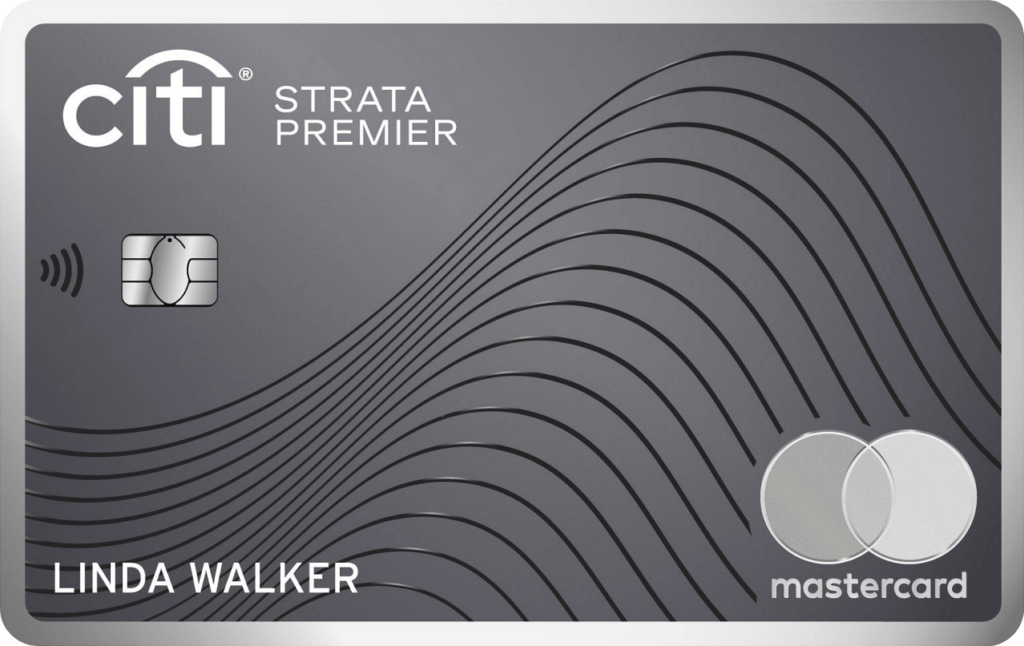
Another underrated card — maybe because its transfer partners aren’t quite as strong — the Citi Strata Premier Card is an utter workhorse of a daily earner. If your spending is varied from month to month or always pretty even, it’ll grab you bonus points on almost everything.
Its 3x points-per-dollar earning rate covers air travel, hotel purchases, restaurants, supermarkets, gas, and EV charging stations. Plus, it’s only $95 a year and comes with a 75,000-point introductory offer after spending $4,000 within three months of opening the card.
It’s definitely the underdog, but I’ve had it in my own wallet for years, and it’s never let me down, especially now that it can transfer to American Airlines.
- Best for: Everyday Earning
- Annual Fee: $95
- APR: 20.49%- 28.49% (Variable)
- Reward Rate: 1X-10X
- Recommended Credit: 670-850
Citi Strata Premier℠ Card
75,000 Bonus Points
Offer Details:
75,000 Bonus Points after you spend $4,000 on purchases in your first 3 months of account opening - redeemable for $750 in gift cards or travel rewards at thankyou.com
Why we like it
The Citi Strata Premier Card is an underrated travel credit card that offers both high points-earning potential and simplicity. While the mid-tier card doesn’t come with any premium benefits, its earning on popular spending categories is almost unmatched. Holders earn 3X points on air travel, hotels, gas stations, supermarkets, and restaurants, making it ludicrously easy to accrue points. Throw in the healthy 75,000-point bonus and you’ve got a great haul of rewards on your hands.
Reward details
10 points per $1 spent on Hotels, Car Rentals, and Attractions booked on CitiTravel.com.
3 points per $1 on Air Travel and Other Hotel Purchases, at Restaurants, Supermarkets, Gas, and EV Charging Stations.
1 Point per $1 spent on all other purchases
Pros & Cons
Pros
The 75,000-point intro bonus is worth $750 in gift cards and well over $1,000 when transferred to travel partners, making the $95 dollar annual fee an afterthought. You could ignore the card for a decade, and it would still be worth it.
Its earning potential is phenomenal: Earning 3X points on categories like gas and supermarkets, which are part of the average American’s biggest expenses, means the Citi Strata Premier will work hard for you on a daily basis.
Cardholders get a $100 hotel benefit each year on a hotel purchase of $500 or more. Not the greatest perk in the world, but a nice saving on an unexpected hotel stay that wipes out the yearly fee itself.
As it’s a World Elite Mastercard, cardholders will enjoy varied benefits like Lyft credits, upgrades and breakfast at select hotels, and cell phone protection.
Cons
Citi’s transfer partners are mainly foreign airlines, so using the points on US-based carriers will require some extra research.
Other mid-tier cards may offer some more interesting perks.
Terms Apply
Which one?
These cards all have the potential for long-term use, and they’ll almost certainly take your earning into the big leagues. Combine any of these with the Venture, and you’re flying.
Of course, things may change over time, so reassess your spending levels regularly.
Card Three - The Level-upper
We all know this is where you want to be. By this point, you’ll have earned upwards of 100,000 points, maybe redeemed them on a few solid flights, and you know this points pursuit is for you. But there’s also something missing. You’ve walked past an airline lounge one too many times without going in…you’ve listened to other hotel guests getting upgrades over you…and, superficial as it may be, you really fancy one of those shiny metal cards.
Now, the last point should be a non-issue. It doesn’t matter.
But the others can transform your travel experiences, open you up to immense bonuses, and some massive earning opportunities to supplement your other cards. I can’t lie, many of the premium cards are eyewateringly expensive, and the earning rates often don’t seem as strong as the mid-range cards. But what they lack in that respect, they make up for in experience. Take some serious time to consider which is the right option for you, as the fees can be rough to validate for the wrong person.
The accessible option: Capital One Venture X Rewards Credit Card
The primary issue with this card is that it tramples on the feet of my first suggestion. That’s not the end of the world: it just means you can close the Venture and work with two cards as your core, or find an extra lifestyle one to really ramp up your earnings.
Regardless, the Capital One Venture X Rewards Credit Card is the most accessible premium card out there. It costs $395 a year to own, but it gives you a $300 statement credit for travel purchases on the issuer’s booking portal, and a 10,000-mile annual bonus so you’re already five bucks up on the card if you use both. Throw in the lounge access, the same 2x miles per dollar earning rate, and a solid intro bonus, and you’ve upgraded your travel world with very little effort.
It’s a safe introduction to the world of premium cards, especially if you’re a little intimidated by the other huge annual fees.
- Best for: Overall Travel

- Annual Fee: $395
- APR: 19.74% - 28.74%
- Reward Rate: 2X - 10X
- Recommended Credit: 720-850
Capital One Venture X Rewards Credit Card
75,000 Bonus Miles
Offer Details:
Earn 75,000 bonus miles when you spend $4,000 on purchases in the first 3 months from account opening, equal to $750 in travel
Why we like it
The Capital One Venture X is a direct competitor to the Chase Sapphire Reserve, and for many seeking a simpler earning scheme with premium perks, it could be the better option. But the Venture X truly shines with one benefit in particular: four free authorized users. Plus, every year on your cardholder anniversary you get 10,000 points to use for travel.
Reward details
10 Miles per dollar on hotels and rental cars booked through Capital One Travel
5 Miles per dollar on flights and vacation rentals booked through Capital One Travel
2 Miles per dollar on every purchase
Pros & Cons
Pros
-
Its great intro bonus of 75,000 miles is worth well over $1,000 when transferred to partner airlines and hotels, or a flat rate $750 when redeemed on the Capital One Travel Portal.
-
Cardholders get a bonus of 10,000 miles each year after their first account anniversary, which is nothing to shrug off, especially when a little bit short of that business class flight. It’s worth almost $200 depending on how you use it.
-
The $300 annual credit for purchases made on the Capital One Travel Portal, combined with the yearly free miles, more than annul the $395 annual fee.
-
Four authorized users can be added for free.
-
Enjoy access to 1,300+ lounges worldwide, including Capital One Lounge locations and participating Priority Pass™ lounges, after enrollment
-
A generous offering of travel insurance, protections and reimbursements round out an excellent array of benefits.
Cons
-
The $300 credit is a bit less flexible than the Chase Sapphire Reserve’s comparable benefit.
-
Miles earning is the same as the Sapphire Reserve on portal-based purchases, but less on general travel spending.
-
Capital One transfer partners are solid, but still don’t include any US-based airlines or hotels.
Terms Apply
A big card for those who want to play: The Chase Sapphire Reserve®
The Reserve is a much bigger step-up. That $795 annual fee isn’t something to brush off without consideration, and it’s beyond important that you run through its list of perks and add-ons to see how much value you can really squeeze from it, and I mean true value: a $500 credit at a luxury hotel you’d never pay for isn’t true value, sorry.
But if you can squeeze the value out, this is a brilliant card. It comes with the full Priority Pass lineup, access to the growing collection of Chase lounges, TSA PreCheck®, Global Entry, Nexus, Lyft credits, hotel perks, elite status at IHG, and a few more spend-based elite statuses, too. Long story short, it’s loaded.
The big earning upgrade is the 4x points per dollar on all airlines and hotels booked direct. That’s a lot of potential points for those who travel a ton. Pound-for-pound, it’s probably the heaviest hitter among the premium cards.
- Best for: Luxury Travel

- Annual Fee: $795
- APR: 19.74% - 28.24% Variable
- Reward Rate: 1X - 8X
- Recommended Credit: Good to Excellent
Chase Sapphire Reserve®
100,000 bonus points
Offer Details:
Earn 100,000 bonus points after you spend $6,000 on purchases in the first 3 months from account opening.
Why we like it
This card just got a major re-vamp and you can now get more than $3,000 in annual value with Sapphire Reserve!
Reward details
8x points on Chase TravelSM
4x points on flights and hotels booked direct
3x points on dining
1x points on all other purchases
Pros & Cons
Pros
The points are worth up to 2 cents a piece when used directly on Chase’s Ultimate Rewards Portal, offering a simple but high-value use for your points.
Plenty of excellent transfer partners allow points to be maximized
Some excellent partnerships with Doordash and Lyft add to its value.
Priority PassTM Select membership allows access to over 1,300+ airport lounges and restaurants.
Cons
It’s subject to Chase’s 5/24 rule. So if you’ve opened five cards in the last two years, you’re most likely not going to be accepted.
Chase has a once-per-lifetime rule for sign-up bonuses on their Sapphire cards, including the Sapphire Preferred, Sapphire Reserve, and Sapphire Reserve for Business. So, once you’ve earned a welcome bonus on any of these cards, you’ll never be eligible for the bonus again on the same card.
Terms Apply
The headline attraction…for some: The American Express Platinum Card®
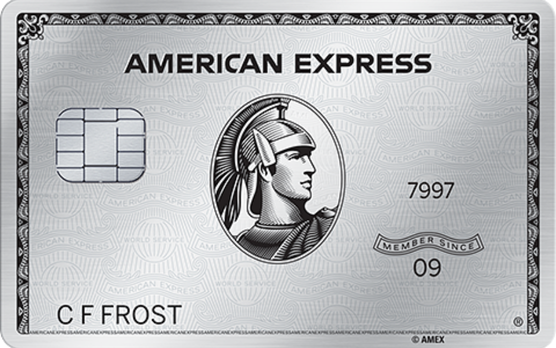
The Amex Platinum is the most famous credit card on the planet. When I had mine, people would mention it when I pulled it out of my wallet. It’s a weird thing. While once upon a time it was a genuine sign that you doing pretty great, all you really need these days is a decent credit score. It doesn’t really mean much.
So lose the ego.
What does it offer you?
In theory, an immense bonus as high as 175,000 points after spending $12,000 in six months. I could comfortably squeeze almost $4,000 in travel out of that. It has the best lounge access of all the cards on this list. It offers elite status with Hilton and Marriott. It’s good, definitely good.
But that’s where it gets complicated. The rest of its benefits are coupon-book style compendium of statement credits for gyms and stores and restaurant programs and everything else under the sun. You have to be careful with all this, because there’s only a handful of us who could really use these, and most of them live in Manhattan.
And it’s important because the annual fee is $895.
Yes, the intro bonus has covered that in theory for a few years, but after that’s gone, you need to be certain you’re pulling the value from somewhere. And with poor earning rates on everything but Amex Travel, you shouldn’t be using this card for day-to-day purchases. This is a purely lifestyle enhancing card.
It’s awesome for some, and if you’re looking at cards for the first time, it’s going to look appealing. But look at the others first.
- Best for: Luxury Perks
- Annual Fee: $895
- Pay Over Time APR
- Reward Rate: 5X
- Recommended Credit: Good to Excellent
American Express Platinum Card®
As high as 175,000 Membership Rewards® Points
Offer Details:
You may be eligible for as high as 175,000 Membership Rewards® points after you spend $12,000 in eligible purchases on your new Card in your first 6 months of Card Membership. Welcome offers vary and you may not be eligible for an offer. Apply to know if you’re approved and find out your exact welcome offer amount – all with no credit score impact. If you’re approved and choose to accept the Card, your score may be impacted.
Why we like it
The Amex Platinum was once the sole dominating force in the luxury credit card space. While it now faces some stiff competition, it still offers unbeatable perks like unprecedented airport lounge access, elite status at Hilton and Marriott, and some outstanding statement credits making the mammoth $895 worth it for some.
Reward details
Get more for your travels with 5X Membership Rewards® points on all flights and prepaid hotel bookings through American Express Travel®, including Fine Hotels + Resorts® and The Hotel Collection bookings.
You earn 5X points on flights purchased directly from airlines or through American Express Travel® on up to $500,000 on these purchases per calendar year.
Pros & Cons
Pros
-
Large intro bonus
Incredible lounge access
-
Statement credits worth over $3,500 annually.
-
Unlock access to exclusive reservations and special dining experiences with Global Dining Access by Resy when you add your Platinum Card® to your Resy profile.
Cons
-
The $895 annual fee is brutally high. Too high for many that can’t, or don’t want to take full advantage of its benefits.
-
Points-earning rates are low unless spending directly on flights or with the Amex Portal.
-
Some of the benefits, like travel credits, are more limited and are harder to use than competing cards’ offerings.
How’s The Wallet Shaping Up?
If you’ve followed my advice here, you’ll be looking in good shape.
You should have:
An excellent base card for day-to-day earning with a low annual fee
A strong lifestyle-based-earning card that homes in on your high spending categories
A premium card that elevates your travel experiences without hurting your wallet — pick carefully, and it’ll earn you even more points.
From there, the world is your oyster. Those three cards could form the spine of your strategy for years to come. Of course, you can cycle them in and out, or shift as your habits change, but they could be permanent.
As a bonus fourth card, you could opt for a hotel card with solid perks or an airline-specific card to save on baggage fees and that kinda thing.
Everything else you open should be for bagging intro bonuses, taking advantage of specific perks, or supplementing your earnings.
Just think about everything you’re doing, and you’ll be good. And never be scared to reach out. We’re here to help.