

Overview
Once upon a time, airline miles were a fairly simple affair. Fly a mile with an airline, earn a rewards mile. From there, once you had enough, you were free to redeem them for flights, upgrades, and whatever else the carrier saw as fair game.
But the rise of credit cards has allowed millions of people to enter the miles game, oversaturating the space, and fundamentally shifting what they are, how they operate, and what they can redeem. What was once a play for a regular traveler’s loyalty is now a marketing ploy for card issuers, making it more important than ever to understand the ins and outs of the systems before you dive headfirst into it.
If you’re a newcomer, or a seasoned pro who needs a refresher, read on to ensure you have a solid grasp of exactly what airline miles are, how you can earn them, and what the heck they can do for you.
A Note On Points vs Miles
Generally speaking, calling these rewards “points” or “miles” is an arbitrary decision. Airlines opt to call them one of the other based on marketing decisions or the tradition within their companies. For the sake of consistency, we’ll use “miles” in this article, but we could switch every use to “points,” and it wouldn’t make a difference.
What Are Airline Miles?
Airline miles are virtual loyalty currencies created by carriers to reward customers for flying and/or spending money with them.
This is the simplest catch-all definition, but a constantly shifting landscape means it’s more complicated than that. The first complication is that, usually, airlines have two distinct kinds of airline miles: elite status earning miles and redeemable miles.
Redeemable miles
Redeemable miles are the simplest to understand. They’re also the most useful type for the average person. Customers accrue these miles by flying with an airline or its partners, spending on airline co-branded credit cards, or transferring from a general travel rewards credit card.
Once enough miles have been earned, these can be redeemed for flights, upgrades, and in a number of other ways. It’s as close to a true “currency” as you get in the miles world. The value of miles is drastically different, however, with some airlines allowing for far better redemptions than others.
Examples of redeemable miles are:
Delta SkyMiles
United MileagePlus
Southwest Rapid Rewards
American AAdvantage
British Airways Avios
Avianca LifeMiles
Alaska Atmos Rewards Points
Elite status earning miles
Elite status earning miles are non-redeemable loyalty metrics that unlock elite status within an airline’s ecosystem. While you do accrue these miles in the same way as redeemable ones, their value is gauged by the benefits you can enjoy as you work your way up the ladder. For example, after earning the required number of status-earning miles, you may get automatic entry to airline lounges, be placed at the top of upgrade lists, skip the line at check-in, and enjoy in-flight discounts.
Broadly speaking, the earning rates for these are lower than redeemable miles, and often have a completely different name or system from their redeemable counterparts. This can be a little confusing for first-timers. As an example, Delta customers earn SkyMiles as their redeemable currency, but earn MQDs (Medallion Qualification Dollars) as their elite status earning currency. Once they earn enough MQDs, they will be awarded Silver, Gold, Platinum, or Diamond Medallion status, with each tier unlocking increasingly valuable perks.
To complicate things further, some airlines split this earning system into multiple parts, as you’ll see with United below. We’ll go into this later, don’t worry.
Examples of elite status earning miles are:
Delta MQDs (Medallion Qualification Dollars)
United PQPs (Premier Qualifying Points) and PQFs (Premier Qualifying Flights)
American Airlines Loyalty Points
Southwest TQPs (Tier Qualifying Points)
Alaska Status Points
British Airways Tier Points
Avianca LifeMiles (confusing, right? Same as its redeemable one)
How Do You Earn Miles?
In the past, earning miles was straightforward. Fly with the airline and receive miles based on the number of miles flown. Fly 6,000 miles, receive 6,000 redeemable miles and often 6,000 elite status earning miles. The redeemable miles often came with a multiplier based on your fare class. For example, economy earned 6,000 miles for 6,000 miles, but business class earned 12,000 miles for 6,000 miles.
Regular business travelers were the primary market for this, and they could often opt to earn elite status using segments flown instead of distance. For example, a business traveler jumping between New York and D.C. twelve times a year could receive 24 segments, while someone who flew across the world once would opt for a mileage-based earning system.
The modern outlook, once again, is very different.
There are three primary ways to earn an airline’s miles:
Fly and spend with the airline
Use a co-branded credit card tied to the airline
Transfer miles from a general credit card partner
There are other more roundabout methods, but the three mentioned are by far the most used.
Fly and spend with the airline
This remains the most traditional way of doing things. By flying with any given airline (or its partners), travelers earn a predetermined number of miles. To earn the miles, customers need to create an account and log in before booking to ensure the flight is tied to their account. Miles are then earned at a predetermined rate, usually tied to the elite status level of the customer. A Gold member of a specific program can expect a significantly higher rate than a general member with no status.
Airline earning rates vary, but, on the whole, most have moved away from a distance-based system to a revenue-centric one. In short, the more you spend, the more you earn.
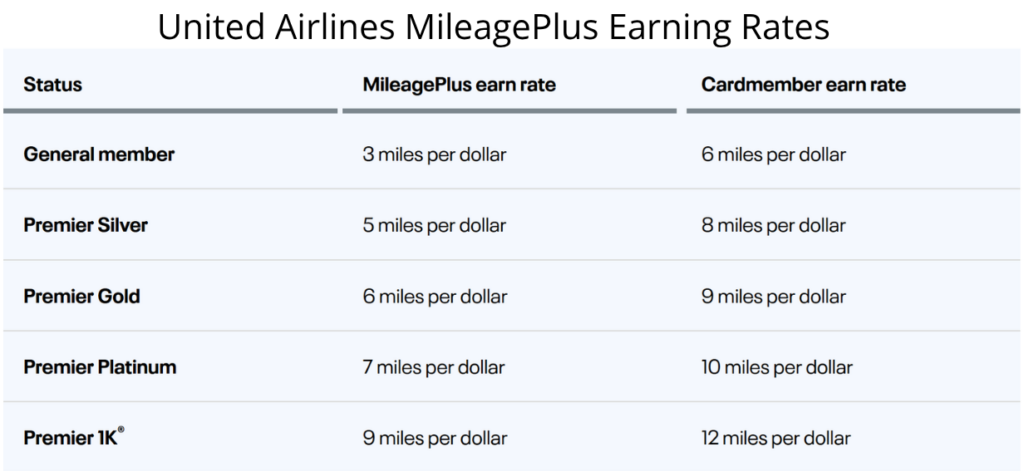
This has been a frustrating shift for many regular travelers, as it can move the airline’s focus away from truly loyal customers who fly many times a year in economy, to travelers with deep pockets who may only use the airline once or twice a year. Many budget travelers feel shunned by the shift, despite some attempts to correct it. This earning is compounded by the addition of co-branded credit cards. In many cases, using a card tied to that airline will increase the earning rates significantly.
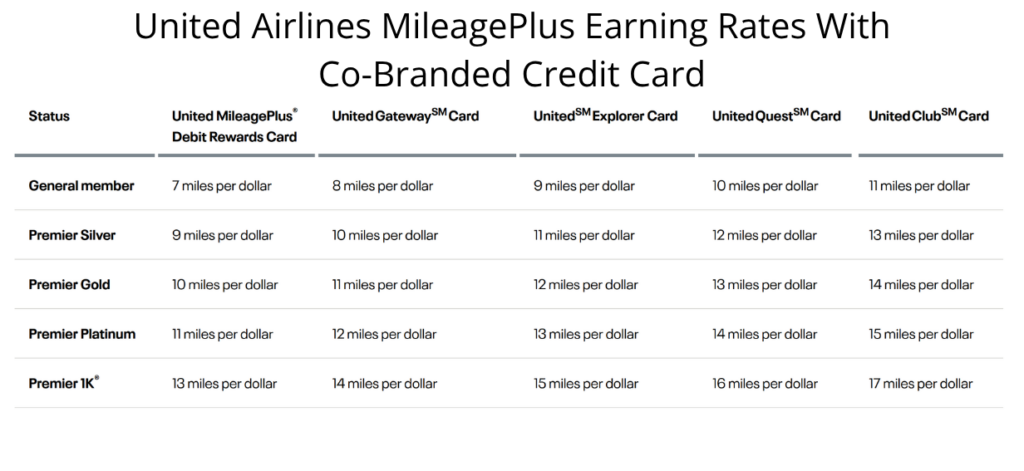
While you can assume that flying business class will earn a lot more points than economy, new shifts towards unbundled pricing are impacting things further. The addition of “Basic” and “Premium” tickets across economy, premium economy, business, and even first class means that even expensive seats can have earnings slashed.
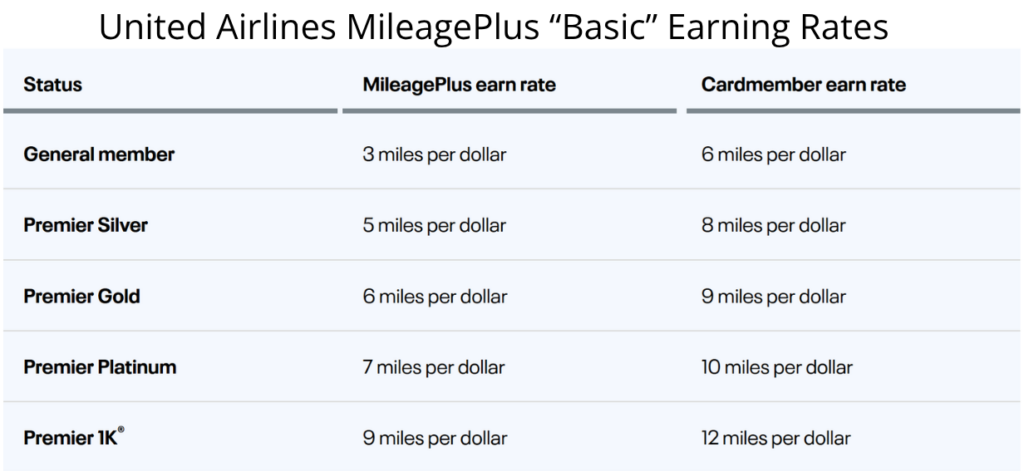
A passenger opting for a “Basic” Business class seat can expect reduced earning rates (or sometimes lose all earning abilities) for that flight in return for a slightly cheaper ticket. They’ll also lose things like free cancellations, free seat selection, and lounge access, too.
If you fly a lot, you can earn a ton with this method. But the reality for most people is that one or two trips a year isn’t going to be particularly life-changing. And that’s why the next method is so important.
Co-Branded Airline Credit Cards
The first airline credit cards emerged in the late 1980s, launching what would eventually become a multi-billion-dollar wing of the finance industry. Instead of limiting the ability to earn miles to those who flew regularly, it allowed customers to earn on virtually every dollar they spent.
While original setups were fairly simple, most airlines, in tandem with banks like Chase, American Express, or Citi, now have multiple tiered products under their banner, ranging from no-annual-fee and no-frills cards to premium products offering numerous high-end perks and accelerated earning in exchange for high annual fees.
Co-branded cards typically come with a set of elevated earning rates. Some no-annual-fee cards may not have any higher rates other than on airline purchases, and will earn 1x mile per dollar on everything else, while more premium cards like the Delta SkyMiles® Platinum American Express Card earn 2x miles per dollar on groceries and dining, 3x miles per dollar on hotel purchases, and 3x miles per dollar on Delta purchases, allowing the holder to rack up large volumes of SkyMiles.
They also often come with introductory offers — huge injections of miles earned by hitting predetermined spending thresholds — that allow customers to amass large quantities of miles with very little effort. The Delta Platinum card mentioned earlier currently offers 90,000 SkyMiles plus a $300 statement credit after spending $4,000 within six months of opening the card.
Many of the cards often earn elite status by earning miles, too. If we look at the same Delta card again, cardholders earn 1 MQD for every $20 spent and enjoy a $2,500 MQD head start each year to help attain elite Medallion status.
If you fly regularly with an airline, or fancy an injection of valuable miles, it’s definitely worth checking out the cards on offer. If you’re eyeing up elite status, they’re almost indispensable. But if you’re not particularly loyal and care about real value, the next section is probably more important.
Transfer miles from a general credit card partner
This section requires an article in itself, but we’ll do what we can to summarize this method of earning airline miles.
In the same way as co-branded cards earn miles on spending, general credit card products, like the American Express® Gold Card or the Capital One Venture X Rewards Credit Card, earn their own redeemable currencies. Amex’s is named Amex Membership Rewards Points, for example, while Chase utilizes Ultimate Rewards points.
Cardholders earn these currencies in the same way — spend on the card, earn miles — but while airline cards are tied to a specific carrier, general cards’ currencies can be transferred to a number of different airline and hotel programs. If you were to open the Chase Sapphire Reserve Card, for instance, you could transfer any points you earned to any of the following programs:
Aer Lingus AerClub
Air Canada Aeroplan
Air France-KLM Flying Blue
British Airways Club
Iberia Club
JetBlue TrueBlue
Singapore KrisFlyer
Southwest Rapid Rewards
United MileagePlus
Virgin Atlantic Flying Club
IHG One Rewards
Marriott Bonvoy
World of Hyatt
Wyndham Rewards
This is helpful for those looking to maximize their spending, as it allows them to move points to the airline or hotel program that offers the best redemption opportunity in any given moment. Air Canada may prove useful for a flight to Europe, but United’s domestic rates may be favorable for a short jaunt on the East Coast. With general cards, you don’t need to choose.
Of course, the downside to this is that you won’t receive much in the way of elite status-earning miles. But again, if you’re not flying enough to reap the benefits of that, it’s not a huge deal.
Other methods
There are other ways to earn miles on top of the ways mentioned. Buying miles is one, but it can be risky if you’re not sure to find a strong redemption for them. Miles are often purchased at poor rates, so it’s best to wait for a bonus offer if you want to risk it.
There are also opportunities via shopping portals and other on-site avenues. Airbnb, for example, has a British Airways portal. Airbnbs booked through this portal earn bonus Avios on top of whatever credit card you use.
These methods can help, but they shouldn’t be the center of any strategy.
How Do You Redeem Miles?
If you’re moving miles from a general card, you have a little more work to do regarding calculating value and shopping around. But if we’re focusing solely on airline miles, this part is actually pretty easy.
Once you have enough of them, miles work just like money. Their exact value can differ greatly from airline to airline, just like real currencies vary between countries. The big difference here is that airlines can alter the value of their points at any time.
Booking is easy. Again, the exact method will vary, but it’ll look similar to the picture example of American Airlines’ booking portal.
First, begin your search as normal, entering preferred origin, destination, dates, and cabin class. Ensure the “Book Using Miles” checkbox is highlighted because the verbiage will vary on each airline. Hit search.
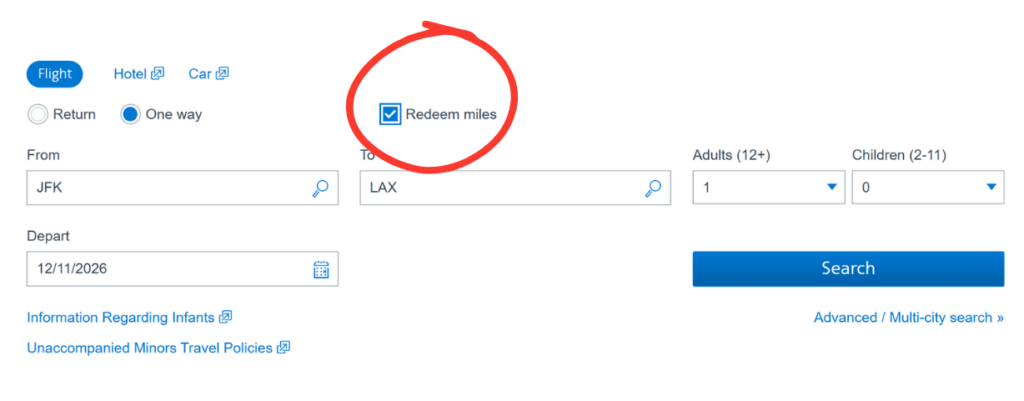
At this point, some airlines may require you to sign in. Do so if prompted. American Airlines doesn’t require a log-in to search for flights. You’ll then be presented with a list of flights, along with the number of miles required to book, and any applicable taxes and fees.
From there, it’s almost identical to booking with cash. Follow the prompts, enter your details, and book the flight.
You may notice on some award searches that airlines other than the one you’re using appear. These are partner airlines; in American’s case above, it’s an Alaska Airlines flight. You’ll also notice it’s actually cheaper than booking an American Airlines-operated flight. We’ll explain this discrepancy later.
Elite status earning miles can’t be “redeemed” as such. They accrue and unlock new status tiers and don’t usually require customers to do anything until they fly. Some do have unique quirks requiring members to opt for one perk over the other, so keep an eye on your individual program so you don’t miss out.
Other ways to redeem airline miles
There are other ways to redeem miles but, on the whole, you won’t get as much value from them. Miles can cover upgrades, seat selection costs, in-flight drinks or snacks, lounge access, and other bits and bobs, but the valuation is generally lower than a full flight redemption.
What Are Airline Miles Actually Worth?
This is where things get complicated. Carriers are in complete control of how much their miles are worth, and recent years have shown multiple devaluations on almost every airline. Elite status earning miles are incredibly subjective, so we won’t allude to these here.
For redeemable miles, however, there are two broad schools of valuation: dynamic and award chart-based.
The latter only applies to a few programs at this point, as most airlines switch to the dynamic style. This is bad news for customers, as more work is required to guarantee a solid redemption.
Dynamic Programs
Dynamic systems operate as they sound — award redemption rates fluctuate based on whatever metric the airline sees fit. If you’ve ever searched for flights in cash and watched the same route double in price a week later, this is what you can expect with dynamic awards. The downside is obvious: some astronomical rates for comparatively cheap flights. The upside, however, is that the opposite is also possible, and you can find some rock-bottom rates offering incredible value against the cash price.
Some airlines, like Southwest, are dynamic but have rates tied directly to the cash price of a flight. While this doesn’t necessarily offer any opportunity for better value, it means it’s a reliably “decent” choice in almost any situation. Delta, on the other hand, can be extremely volatile.
Award charts
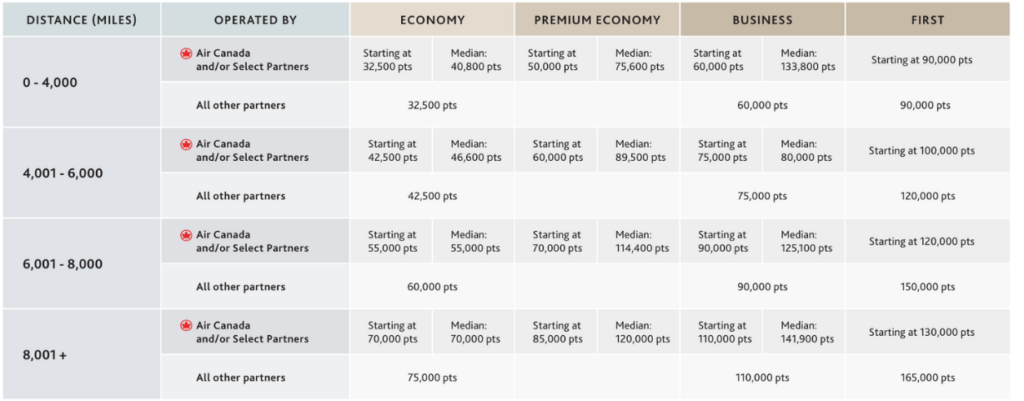
Award charts were once the norm, allocating award rates based on predetermined metrics like distance flown or geographical zones. These rates remained stable regardless of the cash rate of a flight, offering tremendous value for customers with miles to burn.
Most airlines have moved away from this in recent years, but some have held strong, like Air Canada’s Aeroplan system. Others, like American Airlines, operate dynamic award pricing for their own flights, but use award charts for partner redemptions. This was shown in the example above, where its own flight was more expensive than the Alaska flight. The Alaska one was priced using an award chart, while the American Airlines operated flight was dynamic.
Airline systems
US Airlines
Delta Air Lines – Dynamic pricing
American Airlines – Dynamic for own flights, award charts for partners
United Airlines – Dynamic pricing for own flights and most partners
Southwest Airlines – Dynamic pricing
JetBlue – Dynamic pricing (some partners use different pricing structures)
Alaska Airlines – Dynamic for own flights, distance-based award charts for partners
Hawaiian Airlines – Dynamic for own flights, distance-based award charts through Atmos Rewards
Spirit Airlines – Dynamic pricing
Frontier Airlines – Variable pricing with award pricing tiers
Sun Country Airlines – Dynamic pricing
International Airlines
Air Canada – Dynamic for own flights and select partners, award charts for most other partners
Air France – Dynamic pricing through Flying Blue
KLM – Dynamic pricing through Flying Blue
Virgin Atlantic – Dynamic for own flights, award charts for most partners
Emirates – Variable pricing within published award structures
Qatar Airways – Variable pricing for own flights, award charts for partners
Etihad Airways – Dynamic for own flights, award charts for partners
Lufthansa – Dynamic for own flights, award charts for partners
SWISS – Dynamic for own flights, award charts for partners
Austrian Airlines – Dynamic for own flights, award charts for partners
Aeromexico – Variable award pricing
Qantas – Variable pricing for some redemption options, award charts for Classic Flight Rewards
Singapore Airlines – Mainly award charts, with variable pricing for Access redemptions
Which is best?
If you need to focus on one airline, it’s generally better to use an award chart system, as you can expect stronger and more consistent award rates. If value is your goal, however, it’s best to make general transferable points the core of your miles strategy, and use individual airline miles to supplement those efforts. Different airlines offer more in different scenarios, so having the ability to move miles where they’ll work best is a huge benefit.
How to Tell the Value of a Redemption?
The simplest way to work out the value of a flight is some quick maths. If you find a redemption you like the look of, search the same flight in cash. Subtract the award rates’ taxes and fees from the cash rate, then divide by the number of miles required to book it. Multiply it by 100 to get the value of each point in your redemption.
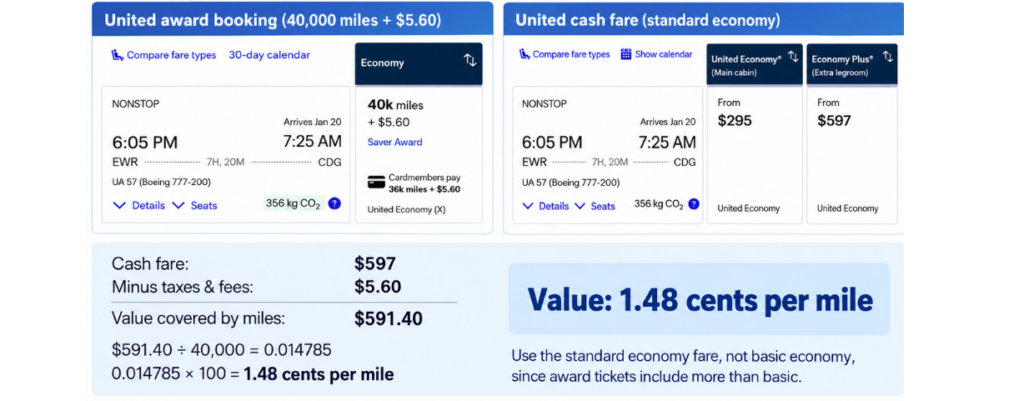
If you’re below 1 cent per mile, it’s a terrible redemption. The larger that number, the more value you’re getting from your miles. Check out the example above which shows an “okay” redemption of 1.48 cents per mile on a New York to Paris flight with United.
The Point
At their core, airline miles are fairly simple to grasp: fly or spend, earn miles, redeem them for flights. But multiple earning streams, varying airline systems, and the added complexity of elite status can make the space a little more murky, especially for newcomers. Learning the ins and outs of each system and homing in on how each can impact your own travel experiences can help straighten things out and turn miles into an indispensable tool.