
Overview
These are odd times. The U.S. national debt hit $39 trillion in March, while household debt trickled to about $18.8 trillion at the same time. That household figure factors in pretty much every aspect of personal finance, from auto and student loans to mortgages. But if you look closely, the credit card portion alone was an immense $1.25 trillion.
At The Daily Navigator, we’re always treading a thin line between helping you to transform your travel experiences using points, miles, and credit cards and unwittingly sending you down a rough path to debt. Don’t get us wrong, credit cards are incredible tools, but they come with an ever-present risk. Luckily, it can be avoided with smart usage and prior planning.
With that said, the current economic climate might put you off a new credit card. We’re taught from a young age that debt is bad, when in reality, it’s more about how you deal with debt and the techniques you use to lessen the damage of things like interest.
With all that in mind, we’re taking a big look at debt, the risks of taking it on, and the even bigger risk of chasing points while you’re doing it. We’ll look at the issues you’ll face, as well as how to keep earning and using points while carrying debt.
The Problem With Chasing Points
The single most important fact in the entire points world is that, at their core, points and loyalty programs are nothing more than marketing tools. They’re designed to lure you in with promises of free travel, lounge access, high-end perks, or even just simple cashback. They want to keep your mind off the fact that you need to spend money to get them.
In many ways, it gamifies spending. Take introductory bonuses, for example. When a new customer is promised 100,000 points after spending $6,000 in three months, there’s an imaginary trigger that’s pulled in most people’s brains. It feels like hitting that threshold is a necessity, or you’re not getting the full value from the card.
Without realizing it, you’re buying an extra cup of coffee each day, you’re covering the check with friends, or going on an extra shopping trip each month to ensure you get where you want to be. A lot of it is subconscious, but it happens.
For many, it might just represent a small loss. They’ve spent more than usual, but they can afford it. For others, it might now mean debt they can’t pay off immediately. And with an APR of 20% or more, that can add up fast, landing them in a major hole.
Rewards Second, Debt First
If you find yourself in this kind of position, or you know you have the potential to do so, it’s time to rearrange your brain. Your financial health (in other words, keeping debt-free or at least manageable) should always be the priority. The second earning points becomes more important to you, you could be in trouble.
For those already in some worrying debt, that means bringing a halt to your points strategy for the moment. For those not in debt but in danger of it, that means pausing, assessing, and correcting any bad habits.
Both require some kind of strategy.
When A 0% APR Card Makes Sense
One thing that can help immensely in some situations is a 0% APR Card
In case you’re not familiar with the term (another sign you need to pause), 0% APR means you won’t be charged interest on your credit card balance for a set period. Each card is different and will offer a different period, from around six months to 21 months. Some will only have this promotional rate on new purchases or balance transfers, or both — just make sure you read the details so you know which.
The balance transfer route, where a customer opens the card and moves the debt from an account with interest accruing to the new one, is an excellent option for those with some debt they’re not comfortable paying off within a few billing periods. It offers a little relief and some wiggle room for paying it back and doing so without adding any extra to the figure.
If you feel responsible enough and grasp that you can’t spend more money than you actually have to live on and pay the debt, you can then use the card for day-to-day expenses, too. That way, you’ll still be earning points on your spending and allowing yourself to pay off debt safely.
For those without significant debt but who might not be able to pay off a larger purchase like a laptop or home appliances immediately, a 0% APR card is also a great choice. In fact, opening one specifically for that purchase could even grab you a cashback bonus. Again, the same rule applies: pay it back.
How To Use A 0% APR Card Without Screwing Yourself
One of the greatest pitfalls of 0% APR cards is that they sort of trick the cardholder into believing they don’t need to pay for a while. And it’s kind of true. They could go the full year or whatever the period is and never pay more than the minimum with no interest. But that defeats the purpose.
As soon as you open the account, put the end date in your calendar, and set out a plan to pay off the whole balance or as much as you can before that date. If you’re using the card for day-to-day purchases, as well, you’ll need to factor that in, too.
Your goal should be to maximize the 0% APR period, paying off all or most of the debt before any interest is added to your balance. Make that the priority.
Can You Still Earn Big And Use a 0% APR Card?
Yes, but it requires you to be strict. If you do have a bit of debt that can be paid off safely within the time constraints of a 0% APR period, but you want to earn some major points on your everyday spending, you can.
The best way to safeguard yourself is to set up an autopay that takes the exact amount you’ll need to pay off your debt by the end of the period. From there, everything else you spend can go on a new card.
Let’s look at an example. Let’s say you have $8,000 of combined debt on a couple of credit cards. In this case, you’d move the $8,000 to a 0% APR card with an 18-month period. Your monthly outgoings average around $2,500, and you bring in around $5,000 a month. Rent can’t be put on your card and costs you $1,000. With $5,000 coming in, you have $3,500 going out and $1,500 left to spare.
To cover the $8,000 debt within 18 months, you’d need to pay around $444 each month. You decide to bump it to a $500 payment, which mean syou’ll pay the $8,000 in 16 months. You have $1,000 left to save or use as you will. If you wanted to, you could put more of that towards it as well.
With your other $2,500 in outgoings, you could open a card like the Capital One Venture X Rewards Credit Card. With $2,500 in spending a month, you’d earn the 75,000-mile bonus in three months, and you’d earn 2x miles per dollar on everything, giving you 130,000 miles in your first year. The only rule here is that you must pay off the entire balance on the Venture X each month.
And just like that, you’ve earned tons of miles and paid off your debt with minimal interest.
Best 0% APR Cards For Travelers
The best 0% APR card for a traveler is not always a traditional travel card. Sometimes the smarter move is a simple cash-back card, because cash back can directly reduce the cost of a trip. Other times, a no-annual-fee travel card makes sense because it gives you rewards without piling on another fixed cost.
As always, card offers change frequently. Check the current terms before applying, especially the intro APR period, balance transfer fee, annual fee, and regular variable APR.
What Cards Offer 0% APR?
There are a lot of cards that offer 0% APR, but generally speaking, you’ll find that most of them aren’t tremendous earners or loaded with big bonuses. This is normal as they’re doing you a huge favor by allowing you the time to pay off your debt without incurring any interest. Still, there are some that offer decent bonuses as well as cashback or points-earning opportunities.
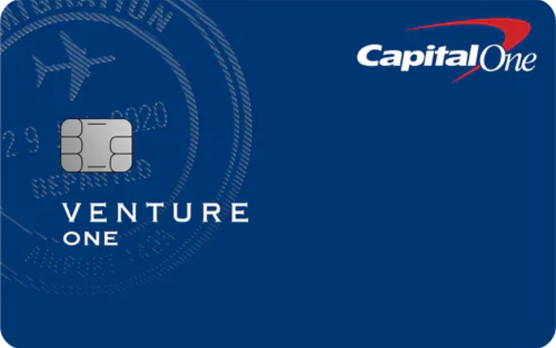
Capital One VentureOne Rewards Credit Card
The Capital One VentureOne Rewards Credit Card is the cleanest points-earning option because it has no annual fee, earns flexible miles, and gives travelers access to Capital One’s transfer partners. It is a good fit for someone who wants to start earning travel rewards without committing to a premium card or a large annual fee. You enjoy 0% intro APR on purchases and balance transfers for 15 months; 18.49% – 28.49% variable APR after that.
- Best for: Beginners wanting to learn points and miles
- Annual Fee: $0
- APR: 18.49% - 28.49% (Variable)
- Reward Rate: 1.25X - 5X
- Recommended Credit: 670-850
Capital One VentureOne Rewards Credit Card
20,000 Bonus Miles
Offer Details:
Earn a bonus of 20,000 miles once you spend $500 on purchases within 3 months from account opening, equal to $200 in travel
Why we like it
The Capital One VentureOne is an excellent card for those taking more deliberate steps into the world of travel rewards thanks to its lack of annual fee and flat-rate earning. Cardholders earn 1.25X miles per dollar spent on all purchases, plus 5X miles per dollar on travel purchased through Capital One. Its 20,000-mile welcome bonus is also solid for a no-annual-fee card.
Reward details
5X miles on hotels, vacation rentals, and rental cars booked through Capital One Travel
1.25 Miles per dollar on every purchase
Pros & Cons
Pros
Its flat-rate earning system makes the VentureOne an easy option for earning miles on all types of spending. While not as high of a rate as its sister cards, it may be the right option for some lower-spending users.
No annual fee makes it fairly risk-free for learning how to transfer points to travel partners and maximize the value of your rewards
The 20,000-mile intro bonus is worth $200 when used directly on the Capital One Portal, and even more when transferred to an airline or hotel partner. With only $500 of spending required to receive the miles, that’s a wonderful 20% return.
No foreign transaction fees. This is fairly uncommon for a no-annual-fee card.
Cons
Earning rate isn’t huge
Big and moderate spenders can earn more points elsewhere
Cash-back cards may be more lucrative
Terms Apply
Citi Strata℠ Card
The Citi Strata Card is a good points-earning option for beginners because it has no annual fee and earns ThankYou Points across several everyday spending categories. It works well for travelers who want flexible rewards and a 0% intro APR window without jumping straight into a premium travel card. It also comes with a 15-month 0% APR period.
Chase Freedom Flex®
The Chase Freedom Flex® is a strong cash-back option because it offers rotating bonus categories, giving cardholders the chance to earn more on everyday spending when the categories line up. It works well for travelers who want flexible value without paying an annual fee, especially if they are disciplined enough not to spend extra just because a category is earning more.
- Best for: Flexible rewards

- Annual Fee: $0
- APR: 0% Intro APR for 15 months from account opening on purchases and balance transfers, then a variable APR of 18.24% - 27.74%.
- Reward Rate: 1X - 5X
- Recommended Credit: Good to Excellent
Chase Freedom Flex®
Earn a $250 bonus
Offer Details:
Limited Time Offer! Earn a $250 Bonus after you spend $500 on purchases in your first 3 months from account opening
Why we like it
The Freedom Flex is, first and foremost, a cash card. But, as Chase allows customers who own other Ultimate Rewards earning products to turn cashback into points, it represents the best of both worlds.
Its intro bonus might not change your world, but its unique (and lucrative) earning structure is enough to validate its presence in almost anyone’s wallet for years to come. The rotating 5% bonus category is a highlight and, combined with being free to own, makes it a stellar card for cashback and points earners alike.
Also, you can supercharge the Ink Cash’s rewards if you have a companion Chase card like the Sapphire Preferred, Sapphire Reserve, or Ink Business Preferred. You can pool your points and make them more valuable by transferring them to Chase’s travel partners like Hyatt, United Airlines, British Airways and more.
Reward details
5% cash back on up to $1,500 on combined purchases in bonus categories each quarter you activate.
5% cash back on travel purchased through Chase TravelSM
3% on dining including takeout and drug stores
1% on all other purchases
Pros & Cons
Pros
-
Tremendous earning rates
-
No annual fee
-
Rewards can be redeemed as cash back or points (depending on the cardholder’s situation)
-
Comes with some protections and benefits not found on many no-annual-fee cards
No foreign transaction fees
Cons
-
Rotating categories need to be activated
-
If cardholders doesn’t have an Ultimate Rewards earning product, earning is limited to cashback
Terms Apply
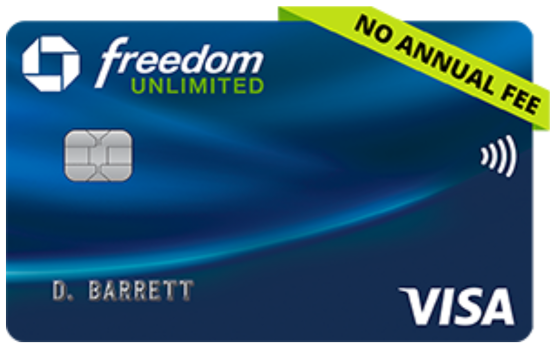
Chase Freedom Unlimited®
The Chase Freedom Unlimited® is the simpler cash-back option, with steady rewards on everyday spending and no need to track rotating categories. It is useful for travelers because cash back can offset trip costs directly, and the rewards can. You’ll also grab 15 months of 0% APR and balance transfers, then a variable APR of 18.24% – 27.74%.
- Best for: Beginners looking for a low risk entry point
- Annual Fee: $0
- APR: Enjoy 0% Intro APR for 15 months from account opening on purchases and balance transfers, then a variable APR of 18.24% - 27.74%.
- Reward Rate: 1.5%-5%
- Recommended Credit: Good to Excellent
Chase Freedom Unlimited®
Earn $200 cash back
Offer Details:
Earn a $200 Bonus after you spend $500 on purchases in your first 3 months from account opening
Why we like it
The Chase Freedom Unlimited does seem like a strong choice for beginners, but its quirks mean it can still find a place in a seasoned points and miles enthusiast’s wallet. While it’s a cashback earning product, those with another Ultimate Rewards earning card can convert that cashback into super-valuable points. The unique bonus structure means the card can be a hugely valuable asset to anyone trying to build their Ultimate Reward points, effectively earning a minimum of 1.5% or 1.5 points per dollar on everything.
Reward details
5% cash back on travel purchased through Chase Travel℠, our premier rewards program that lets you redeem rewards for cash back, travel, gift cards, and more.
3% cash back on drugstore purchases and dining at restaurants, including takeout and eligible delivery service.
1.5% cash back on all other purchases.
Pros & Cons
Pros
-
Generous introductory earning rate
-
No annual fee
Cons
-
Another Chase card is required to earn points
-
Some cards have better rates after the introductory year
Terms Apply
The Bottom Line
Debt is high across the country right now. Doing what you can to get yourself out of it while still gifting yourself the chance to earn valuable points and miles is possible: it just takes a little bit of planning, some discipline, and the right tools, like a 0% APR credit card.