
Overview
Robinhood is officially stepping into the ultra-premium credit card space.
The investing platform recently announced the launch of the Robinhood Platinum Card, a new invite-only premium credit card carrying a $695 annual fee and a long list of luxury perks aimed squarely at competitors like the American Express Platinum Card® and Chase Sapphire Reserve®.
If you’re unfamiliar with Robinhood, it’s a financial services platform best known for helping popularize commission-free stock trading in the United States. It was originally launched solely as an investing app with a hard focus on younger customers interested in trading, but has since expanded into retirement accounts, cash management tools, crypto trading, and banking-style products. In other words, it’s trying to become an all-round financial institution.
So, a premium credit card marks a natural next step.

- Free US stock and ETF trading
Robinhood
As the name suggests, Robinhood is looking out for the little guy—although we’re not talking about robbing anyone. The app-based investment platform suits newcomers to investing thanks to an easy-to-grasp interface, fractional shares, and decent cash management.
Our quick take
Its approachability for beginners, however, is its downfall for more experienced traders. Those with an eye on more will find themselves frustrated by the limited investment options and research tools. One area it does shine is its cryptocurrency trading platform—another strong attribute for those new to the scene.
Pros and Cons
Pros:
Simple app-based format
Fractional shares
Its own IRA
Earn interest on uninvested cash
Cons:
No mutual funds or bonds
Customer service has a bad reputation
Limited research tools
What is the Robinhood Platinum Card?
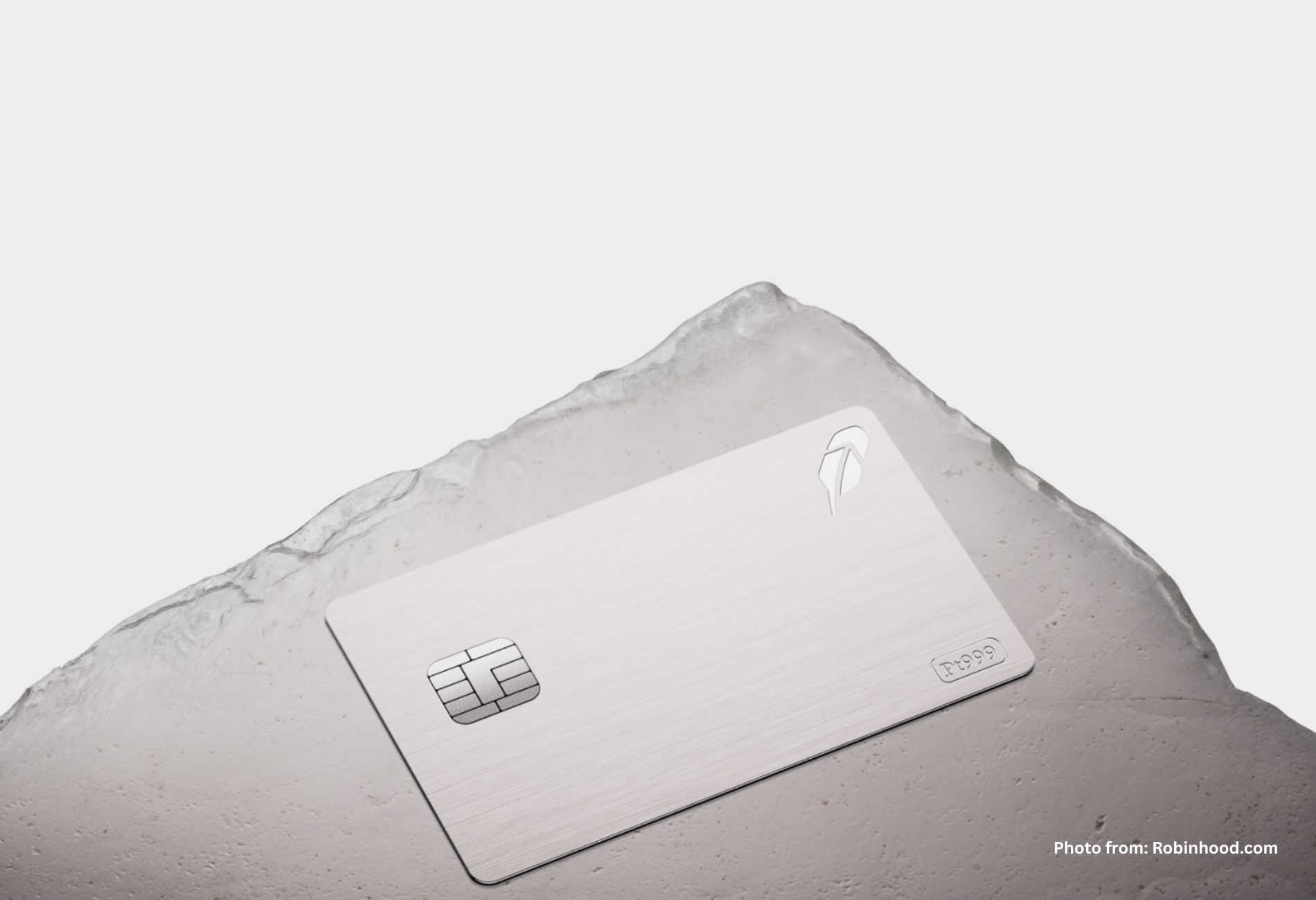
The new card is marketed as a premium product, built for higher-spending customers already well within the company’s ecosystem. Access is advertised as “invite-only”, but you can add your name to a consideration list on the official website. There’s no readily available information as to the acceptance specifications, but you’ll need to be on the waitlist. I don’t think it’s as exclusive as it sounds, though. I think Robinhood is just being selective for the moment to test the water.
It’s not Robinhood’s first credit card. The Gold version, released back in 2024, had a similar rollout, and it’s still not clear what validated someone’s acceptance there, either.
The card itself leans heavily into luxury branding. The company says it’s 99.9% platinum plated (overkill?) and includes a collection of travel, dining, and lifestyle perks typically associated with top-tier premium cards.
The annual fee is firmly in premium territory.
The Robinhood Platinum Card comes with a $695 annual fee, which puts it in the same park as other premium cards like the American Express Platinum Card® or the Chase Sapphire Reserve®. Also similar to those cards, it comes with a lot of add-ons, which can help offset the cost of the card before earnings ever come into play.
The list will look pretty familiar, ticking many of the same boxes as the cards just mentioned.
It includes:
Priority Pass lounge access
TSA PreCheck or Global Entry credits
Travel protections
Hotel perks
Lifestyle memberships and credits
Robinhood is also leaning into more modern wellness-focused perks than many traditional issuers, with partnerships with brands like Oura, Amazon One Medical, and Function Health. There’s also a $200 annual credit for qualifying wearables.
What’s its earning style?
This isn’t a points-based card. It’s rooted firmly in the Robinhood ecosystem and offers rewards in the form of cashback. So, if you’re looking for free flights and hotel stays, you’re already better off checking elsewhere.
With that said, its earning rates are strong. You’ll get 5% cashback on dining, plus 5% cashback on flights, and 10% cashback on hotels and car rentals when booked through the Robinhood app. Those are, technically speaking, up there with the best. It’s worth remembering, though, that you can’t get outsized value from cashback. The American Express® Gold Card, for example, earns 4x points per dollar at restaurants worldwide on up to $50,000 in purchases per calendar year, then 1X, but Amex Membership Rewards points are worth more when transferred to a travel partner. In real-money terms, you’re getting 8% cashback or more from that card.
If you’re looking for a high-earning cashback card, it could work.
Can it Compete with Other Premium Cards?
That’s the big question.
While the Robinhood Platinum Card includes many of the same headline perks as competitors, it lacks one major feature valued by frequent travelers: transferable points. If that’s you, this card should be a non-starter, especially as it doesn’t come with an introductory offer.
In reality, this card isn’t designed to compete with those cards. It’s focused on keeping people in the Robinhood ecosystem, and that’s who will benefit the most. The invite-only thing adds an extra layer of “prestige” to the whole thing, but don’t let yourself get caught up in that.
It’s a decent product and offers things that most strong cards do. But it’s very much in a niche market. We’ll keep an eye on this card as it rolls out, to see if it winds up being more useful than it looks.