Overview
It’s not too often you get to write about an airline beef, but here we are.
Delta versus United. Goliath versus A-Different-Type-of-Goliath.
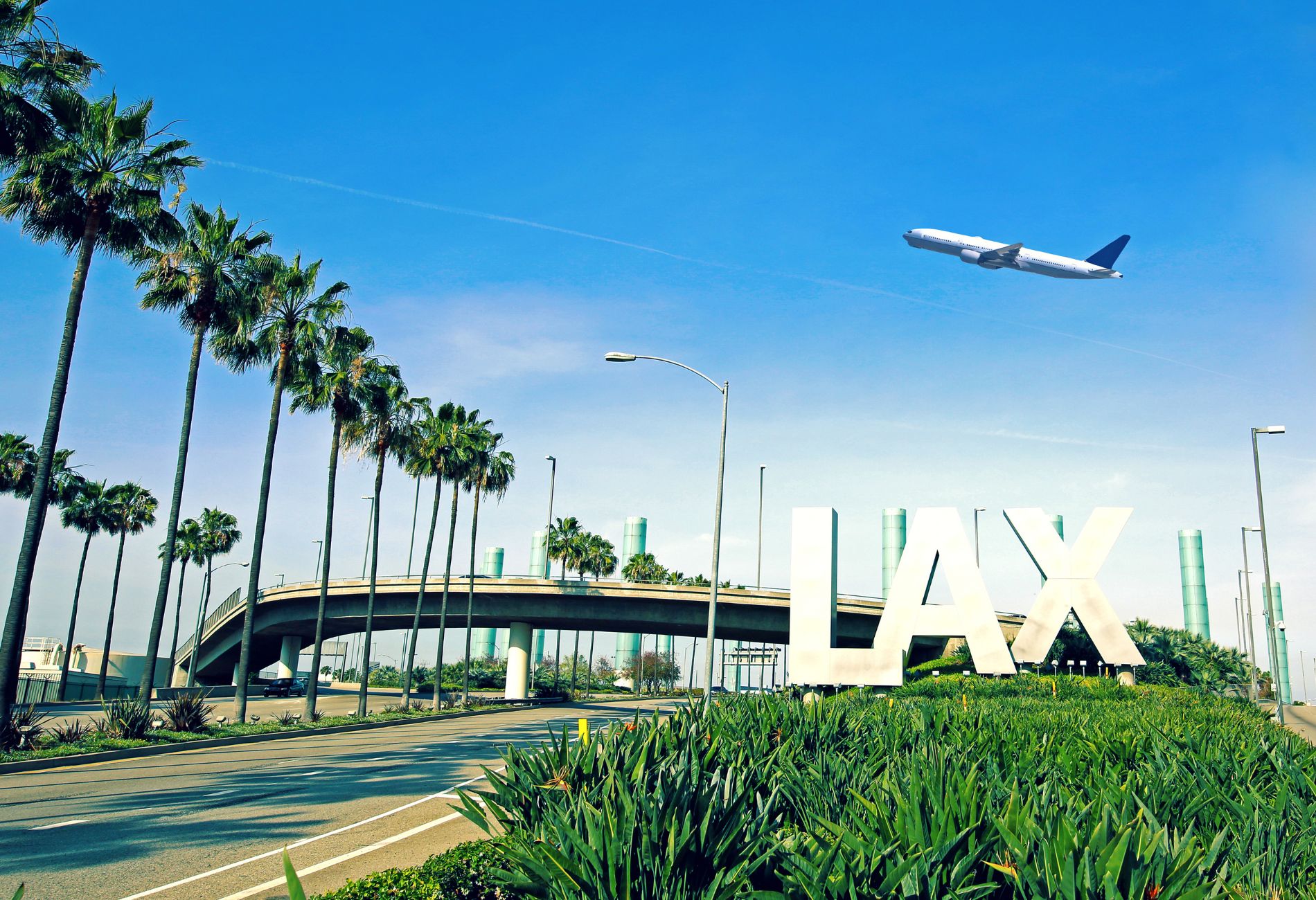
And it’s all taking place in one of the country’s most important airports — LAX.
Let’s look at what’s happening, and what it means for you and your miles.
What’s the Background?
Saying Delta and United are fighting over LAX is a severe simplification of a decades-long battle involving almost every major US airline. Airport dominance is an expensive, high-risk war of attrition, fought through new routes, additional frequencies, terminal investments, loyalty programs and, occasionally, strategic retreats.
The broad shape of the major carriers’ networks has been established for years. Delta operates nine US hubs, including its primary hub in Atlanta and major operations in Seattle, Detroit, JFK and Los Angeles. United operates eight, including Newark, San Francisco, Chicago O’Hare, Houston and LAX.
Each plays a different role within the airline’s wider network, with some generating enormous volumes of connecting traffic, while others give airlines access to major local, international or premium-travel markets. Seattle, for example, serves as an important global gateway for Delta’s Asian routes, while San Francisco performs a similar role for United (although both now offer European routes and beyond).
Delta takes a two-airport approach to New York. JFK supports much of its international and transcontinental operation, while LaGuardia primarily serves domestic routes. United instead concentrates its New York-area operation at Newark, which functions as both a major domestic hub and one of the airline’s most important international gateways.
These battlelines are never truly settled. Airlines constantly add routes, increase frequencies and withdraw from underperforming markets as they attempt to strengthen their position.
Los Angeles, if you noticed in the lists of airline hubs, is a unique city. The airport, one of the world’s busiest, has never belonged to one airline. Its gigantic local market is too large for any airline to abandon, but that same fact makes it extremely difficult to dominate. Delta and United are both major influences at the airport (as is American, but it’s currently hanging out for this one), and are finding themselves locking horns over new developments. Either airline would love to be the dominant force there, and both feel they have a stake in the matter. But which will come up trumps?
Why are Things Getting Testier Than Usual?
Delta currently has the edge in LAX, going ahead of United in terms of market share, and finding itself with a solid infrastructure in the airport after years of terminal development. It now has 27 gates in LAX, located in T2 and T3, with direct access to the primary international terminal, Bradley. United, on the other hand, has been a little hamstrung by its own terminal location and only has 20 gates — all located miles away from Bradley where its partners are based.
In short, there’s a lot going on.
But a few moves from Delta have suggested things are about to get even more complicated.
First, just days after JetBlue announced it would be vacating its space in EWR, Delta unveiled its own Newark-LAX flights. If you remember, Newark is one of United’s busiest hubs. Delta is setting up shop right in the midst of that, and launching direct competition for one of United’s most frequent routes.
By offering Northern New Jersey residents a Delta flight, they now have another option, a different type of service, and a potentially easier experience at LAX if they’re going on for an international transfer. That’s a gauntlet thrown down.
Secondly, there’s been some literal trash talk, primarily from United, over Delta’s new Pacific roots. Delta added flights to Hong Kong from LAX, as well as a few from Chicago O’Hare, prompting United CEO to say,
“The [UA] LA-HKG route is quite successful now as a result of [the BKK/SGN tags]. We face new competition now from another airline based in ATL, and I know they’re not going to do very well there. I can already tell from their pricing. They’re unable to fill up their airplanes”.
Delta is continuing to add routes across the board and, while they may not match United’s frequency yet, they do offer another choice — and Delta is generally regarded as the best airline in the US by regular flyers. At that point, it becomes a choice between regularity and favoritism.
These decisions are complex, and it’s hard to read into exactly what either is planning. But increased competition at one of the busiest airports in the world can affect our points and miles. Let’s take a look at how that might happen.
How Will That Impact Your Points?
It’s a hard question to answer. The primary reason is that both Delta and United operate dynamic pricing systems, allowing them to set rates however they see fit. The primary revenue driver for each of their aspirations in LAX will not be impacted by people redeeming points, but it may be impacted by the loyalty of those customers.
With that in mind, we may see an increase in sale fares from LAX on both sides of the equation.
A quick flexible search on both airlines on the routes we mentioned makes for an interesting comparison. LAX to EWR with United has daily low rates of just 15,000 miles with $6 in fees, while the best for Delta is 25,000 SkyMiles. On the LAX to Hong Kong route, it’s the opposite, with United offering a best of 55,000 miles and Delta only requiring 23,000 SkyMiles.
Is this reflective of the United CEO’s comments that Delta can’t fill seats on its Hong Kong flights? Or just an excellent redemption on its part?
The long-term effects are hard to quantify, and it’s anyone’s guess what each airline might do to get its nose in front of the other. Delta is definitely the primary instigator at the moment, and with its infrastructural gains in LAX, it looks like that may continue. But United isn’t an airline that will simply be brushed aside. It still has major dominance in multiple sectors at the airport.
The best advice? Keep tabs on redemptions as things progress, and check in to see what routes are being added, removed, contested, and withdrawn.
The Point
LAX will continue to be an airline battleground, with dominance shifting between Delta and United. While Delta has made some bold moves to step into United’s territory on multiple fronts, United won’t feel too threatened in the grand scheme of things. For now, there won’t be a ton of impact on your points and miles, but it feeds into the notion that you shouldn’t be loyal to one airline – you need to go to the one offering the best deal in any given scenario, both for points and cash redemptions.