
Overview
There’s a lot going on when a kid heads off to college. It’s often their first time living alone, which means if they haven’t worked out how to work an alarm or a laundry machine, they’re gonna need to learn quickly. But while a massive part of the college experience is about getting young people ready for the future, it often misses out on a significant piece of an integral part of their financial lives: credit.
College is the perfect time to start building credit, if they haven’t already, and allows a student to graduate with a solid score, helping them with everything from apartment applications to cellphone contracts and, of course, the potential to open cards and earn points and miles.
But what’s the best way to do it? And how much trust can you place in students to ensure they don’t graduate with debt as well as their degree?
Here are some strong options for students and other first-time cardholders who want to build credit and learn the ropes of credit cards.
Opt for Student Cards
Many banks and credit card issuers offer student-specific credit cards that allow them to build credit safely, and even earn cashback or other rewards. Generally speaking, these cards will accept applicants with little or no credit but will need some evidence of income — whether that’s a part-time job, scholarships and grants from school, or an allowance from a parent. Co-signing can also help get over this hurdle.
Usually, the spending limits on these cards are low, to help prevent students from landing themselves in debt from the get-go. There isn’t usually an annual fee applied to the cards either to help lessen the financial burden.
Generally speaking, if you’re over 18, can show some proof of income, are a US citizen, and are enrolled in a two- or four-year college program, you’ll be good to go.
Here are some solid student card options.
Capital One Savor Rewards for Students
Best for: Most students
Annual fee: $0
Welcome offer: $100 after spending $300 within three months
Savor Student earns 3% cash back at grocery stores and on dining, entertainment, and eligible streaming services, plus 1% on everything else. Those categories cover a significant chunk of the average student budget, making it the strongest all-around option on this list. It’s a great card for allowing students to grasp the rewards that can come from credit cards, while building credit responsibly.
The welcome offer also has a relatively manageable spending requirement of just $100 in three months. Even with a meal plan, there’s a good chance a student will rack that up in that time. Just remember that superstores such as Walmart and Target do not qualify for the elevated grocery rate.
Capital One Quicksilver Rewards for Students
Best for: Keeping things simple
Annual fee: $0
Welcome offer: $100 after spending $300 within three months
Quicksilver Student earns an unlimited 1.5% cash back on every purchase. It won’t beat Savor in its bonus categories, but students never need to remember which card to use for groceries, textbooks, transport, or anything else. This is especially good if the student has varied expenses, and maybe doesn’t need to do much in the way of groceries.
The flat rate is simplistic too, which many people value — even in the points and miles game. It mirrors more valuable cards like the Capital One Venture X Rewards Card.
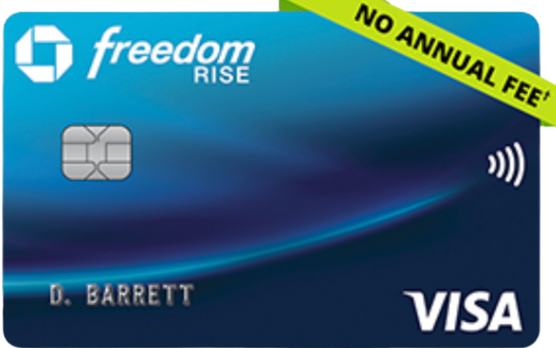
Chase Freedom Rise
Best for: Students already banking with Chase
Annual fee: $0
Welcome offer: $25 statement credit for setting up automatic payments and remaining enrolled for at least 90 days.
Freedom Rise is an interesting option in that it rewards good habits in a way others don’t. It’s the perfect card for someone who already has an eye on stronger rewards cards. It earns 1.5% cash back on regular purchases, while a limited-time offer currently provides 3% on dining up to $6,000 spent during the first six months.
Chase says keeping at least $250 in one of its checking or savings accounts can improve your approval chances. Eligible cardholders may also be upgraded to Chase Freedom Unlimited after demonstrating responsible use, which would be a huge benefit for the right student in terms of rewards.
- Best for: Building credit from scratch
- Annual Fee: $0
- APR: 25.24% Variable
- Reward Rate: 1.5%
- Recommended Credit: No credit history and a Chase checking account with $250+
Chase Freedom Rise® Credit Card
Reward Rate: 1.5% cashback
Offer Details:
No current offer live
Why we like it
The Chase Freedom Rise is a unique card. It’s designed as a credit-building card but comes with none of the typical barriers. There’s no deposit required and no annual fee, making it approachable for credit newbies. Chase has stated that having a checking account with the bank with $250 or more in it will have an increased likelihood of acceptance.
Despite the lack of fees or deposits, it still offers 1.5% cashback on all qualifying purchases and even a $25 statement credit when you sign up for automatic payments within three months of opening an account. Chase regularly assesses cardholder progress and will increase credit limits and even offer upgrades as you improve. It’s a card for those with an eye on the future.
It’s important to distinguish a card for beginners and a card for those with poor credit. If you fall below a 629 score, you probably won’t be accepted.
Reward details
1.5% cashback
Pros & Cons
Pros
No annual fee
No credit history required
1.5% cashback
Regular process checks and upgrade opportunities
$25 bonus for enrolling in autopay
No deposit required
Cons
Not for those with poor credit
APR is pretty high
No bonus earning categories
Terms Apply
Opt for Authorized User Cards
We don’t want to say you don’t trust your kid with their own credit card…but the last time you gave them an allowance, it was gone in two days. If that feeling rings true, opting to add them as an authorized user on one of your own cards can be the perfect middle ground.
In this scenario, the student will get their own card that usually earns in the same manner as the primary cardholder’s, but will still have the oversight of the primary, allowing them to build credit with supervision. The big plus here is that you can do this long before the kid is at college, with some cards not even enforcing age limits. Another benefit is that the student can earn better rates than on the student cards above.
Here are some solid cards that would allow a student to maximize their earnings safely.
Capital One Venture X Rewards Credit Card
Best for: Kids traveling out of state for school
Annual fee: $0 for up to four authorized users
Welcome offer: 75,000 Miles after
The Venture X is a brilliant earner, capturing 2x miles per dollar on everything. Authorized users are free (up to four), and the primary can even pay $125 to gift the authorized user the same lounge access, perfect for a kid who needs to fly across the country to get to school.
Primary cardholders can easily lock a specific card, too, just in case they’re going a little haywire on the spending.
- Best for: Overall Travel

- Annual Fee: $395
- APR: 19.49% - 28.49% (Variable)
- Reward Rate: 2X - 10X
- Recommended Credit: 720-850
Capital One Venture X Rewards Credit Card
75,000 Bonus Miles
Offer Details:
Earn 75,000 bonus miles when you spend $4,000 on purchases in the first 3 months from account opening, equal to $750 in travel
Why we like it
The Capital One Venture X is a direct competitor to the Chase Sapphire Reserve, and for many seeking a simpler earning scheme with premium perks, it could be the better option. But the Venture X truly shines with one benefit in particular: four free authorized users. Plus, every year on your cardholder anniversary you get 10,000 points to use for travel.
Reward details
10 Miles per dollar on hotels and rental cars booked through Capital One Travel
5 Miles per dollar on flights and vacation rentals booked through Capital One Travel
2 Miles per dollar on every purchase
Pros & Cons
Pros
-
Its great intro bonus of 75,000 miles is worth well over $1,000 when transferred to partner airlines and hotels, or a flat rate $750 when redeemed on the Capital One Travel Portal.
-
Cardholders get a bonus of 10,000 miles each year after their first account anniversary, which is nothing to shrug off, especially when a little bit short of that business class flight. It’s worth almost $200 depending on how you use it.
-
The $300 annual credit for purchases made on the Capital One Travel Portal, combined with the yearly free miles, more than annul the $395 annual fee.
-
Four authorized users can be added for free.
-
Enjoy access to 1,300+ lounges worldwide, including Capital One Lounge locations and participating Priority Pass™ lounges, after enrollment
-
A generous offering of travel insurance, protections and reimbursements round out an excellent array of benefits.
Cons
-
The $300 credit is a bit less flexible than the Chase Sapphire Reserve’s comparable benefit.
-
Miles earning is the same as the Sapphire Reserve on portal-based purchases, but less on general travel spending.
-
Capital One transfer partners are solid, but still don’t include any US-based airlines or hotels.
Terms Apply
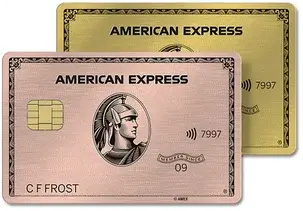
American Express® Gold Card
Best for: Kids spending heavily on food
Annual fee: $0 for up to five authorized users
Welcome offer: As high as 100,000 Membership Rewards points after spending $6,000 within six months of opening an account.
The Amex Gold earns 4x points at restaurants worldwide and U.S. supermarkets, making it perfect for a student buying groceries, ordering takeout, or eating around campus. Authorized-user spending earns points in the primary cardholder’s account, and the first five additional cards are free.
Parents can also set a spending limit as low as $200 on an additional card, providing a little protection if Domino’s starts to crop up on a daily basis.
- Best for: Foodies
- Annual Fee: $325
- See Pay Over Time APR
- Reward Rate: 1X-5X
- Recommended Credit: Good to Excellent
American Express® Gold Card
Earn as high as 100,000 Membership Rewards® Points
Offer Details:
You may be eligible for as high as 100,000 Membership Rewards® Points after you spend $8,000 in eligible purchases on your new Card in your first 6 months of Card Membership. Welcome offers vary and you may not be eligible for an offer. Apply to know if you’re approved and find out your exact welcome offer amount – all with no credit score impact. If you’re approved and choose to accept the Card, your score may be impacted.
Why we like it
The American Express® Gold Card takes your dining and grocery spending to the next level, offering an impressive 4X Membership Rewards® points per dollar spent on purchases at restaurants worldwide, on up to $50,000 in purchases per calendar year, then 1X points for the rest of the year, and 4X Membership Rewards® points per dollar spent at U.S. supermarkets, on up to $25,000 in purchases per calendar year, then 1X points for the rest of the year.
To put this into perspective, if you spend $8,400 annually on dining and groceries, which aligns with the average American’s spending, you could earn enough points for a roundtrip flight to Hawaii. Meanwhile, the bonus alone is worth over $1,000, adding significant value to your everyday spending. It’s probably the best card out there for dining and grocery purchases.
Reward details
Earn 4X Membership Rewards® points per dollar spent on purchases at restaurants worldwide, on up to $50,000 in purchases per calendar year, then 1X points for the rest of the year.
Earn 4X Membership Rewards® points per dollar spent at US supermarkets, on up to $25,000 in purchases per calendar year, then 1X points for the rest of the year.
Earn 5X Membership Rewards® points on prepaid hotel stays booked through AmexTravel.com or the Amex Travel App™.
Earn 3X Membership Rewards® points on flights booked through AmexTravel.com, the Amex Travel App™, or purchased directly from airlines.
Earn 2X Membership Rewards® points on prepaid car rentals booked through AmexTravel.com or the Amex Travel App™ and cruises booked and paid through AmexTravel.com.
Earn 1X Membership Rewards® point per dollar spent on all other eligible purchases.
Pros & Cons
Pros
-
There are a lot of statement credits available, if you utilize them.
-
The dining and grocery rewards are some of the best out there.
-
Explore over 1,400 upscale hotels worldwide with The Hotel Collection and receive a $100 credit towards eligible charges* with every booking of two nights or more through AmexTravel.com. *Eligible charges vary by property.
-
Apply with confidence. Know if you’re approved for a Card with no impact to your credit score. If you’re approved and you choose to accept this Card, your credit score may be impacted.
Cons
-
$325 annual fee
-
No major travel perks like its bigger sibling, the Amex Platinum
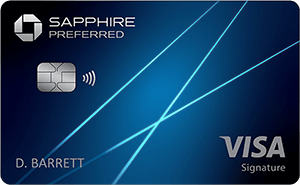
Chase Sapphire Preferred® Card
Best for: Kids living off campus
Annual fee: $0 for authorized users
Welcome offer: 75,000 Ultimate Rewards points after spending $5,000 within three months of opening an account.
The new-look Sapphire Preferred now earns 3x points on dining, gas, EV charging, online groceries, eligible streaming services, and vacation-home rentals, plus 2x on other travel. That’s a brilliant mix for a student paying for food, driving to campus, or heading home during the holidays.
Authorized users are free, and every purchase they make earns points for the primary cardholder. Those points can later be transferred to airline and hotel partners including United, Air Canada, Southwest, World of Hyatt, and Marriott Bonvoy, so you won’t even need to pay when you visit them. Just make sure there’s a Hyatt Category 1 nearby, and you’ll be set for all four years.
- Best for: Beginner Travelers

- Annual Fee: $95
- APR: 19.24% - 27.49% Variable
- Reward Rate: 1X - 5X
- Recommended Credit: Good to Excellent
Chase Sapphire Preferred® Card
75,000 Bonus Points
Offer Details:
Earn 75,000 bonus points after you spend $5,000 on purchases in the first 3 months from account opening.
Why we like it
The Chase Sapphire Preferred Card is the ultimate all-around travel credit card. It fits perfectly into almost any points-earner’s wallet. Points novices can enjoy a significant intro bonus and easy to grasp spending categories with an approachable annual fee. The more experienced can utilize its high value earning potential as a secondary card and also gain access to Chase’s strong travel booking portal.
Reward details
5x on travel purchased through Chase Travel℠
3x on dining
3x on vacation homes
3x on gas & EV charging
3x on top streaming services and online groceries (excluding Walmart, Target, and wholesale clubs)
2x on all other travel purchases
1x on all other purchases
Pros & Cons
Pros
Earn up to $100 in statement credits each account anniversary year for hotel stays through Chase Travel, which already negates the annual fee.
Statement credits for Apple TV and DashPass
Cardholders also have access to a string of travel protections like rental coverage, cancellation insurance, and purchase protection.
Cons
It’s subject to Chase’s 5/24 rule. So, if you’ve opened five cards in the last two years, you’re most likely not going to be accepted.
Competing cards like the Capital One Venture have a better earning rate for non-bonus spend.
Terms Apply
The Point
Building credit should be a priority for college students, yet it’s an overlooked aspect of daily life at that time. Opting to open a student card or adding them as an authorized user on a traditional credit card is one of the best ways to do this safely, taking full advantage of the protections each option affords.